 |
| ||||||||||||||||||||||||||||||||||||||||||||||||||||||||||||||||||||||||


|
| ||||||||||||||||||||||||||||||||||||||||||||||||||||||||||||||||||||||||
Agroforestry Technology Information Kit (ATIK) 5
November 1992
International Institute of Rural
Reconstruction
(IIRR)
Silang 4118, Cavite, Philippines
Tel. No. (0969) 94-51
Fax No.
(632) 522-24-94
Department of Environment
and Natural Resources
(DENR)
Visayas Ave., Diliman
Quezon City, Philippines
Ford Foundation (FF)
6th Floor, Do�a Narcisa Bldg.
Paseo
de Roxas, Makati
Metro Manila, Philippines
ISBN: 0-942717-31-7
|
| ||||||||||||||||||||||||||||||||||||||||||||||||||||||||||||||||||||||||
Message
Agroforestry, the land management system of incorporating crop production with tree and/or production, evolved to become one of the most widely promoted tools for sustaining development in the uplands. To supplement the materials used by upland development extension workers in promoting agroforestry, a group of specialists, technicians and farmers from 11 government and nongovernment organizations met at the invitation of the international Institute of Rural Reconstruction in Silang, Cavite in November 1989 to develop the Agroforestry Technology Information Kit (ATIK). In November 1992, some of the specialists, together with some farmers and an additional number of specialists and technicians, met again at IIRR to revise the ATIK.
The updated kit is handy, easy-to-understand and full of illustrations. It widely uses indigenous technologies. With this kit, it is hoped that extension workers and upland dwellers develop a better understanding and appreciation of agroforestry. The success of agroforestry as a tool for sustaining upland development$ however, will depend on how this tool is introduced and implemented. Sustainable agroforestry systems can only be attained if upland dwellers are involved in the planning and establishment of such systems.
I commend all those involved in the production of this useful kit.
Angel C. Alcala
Secretary
Department of Environment and Natural Resources
|
| ||||||||||||||||||||||||||||||||||||||||||||||||||||||||||||||||||||||||
Workshop to revise the agroforestry technology information kit (ATIK)
The first workshop to develop the Agroforestry Technology Information Kit - now more popularly known as ATIK - was conducted by the International Institute of Rural Reconstruction (IIRR) in its Silang Campus, Cavite, Philippines, on November 4-13, 1989. There were 39 participants to this workshop who came from 11 government and nongovernment organizations (GOs and NGOs).
ATIK was produced primarily for use by DENR technicians who have been implementing the Social Forestry Program nationwide. DENR conducted a nationwide survey among its staff who were involved in the implementation of its Integrated Social Forestry Program and also primary users of ATIK. A questionnaire was formulated, focused on the actual experiences of these technicians in using the ATIK and on specific revisions they proposed to make on the kit. A Planning Committee was created to study the technicians' proposed modifications to the ATIK, as well as to plan for the workshop to revise it. The committee was composed of For. Domingo Bacalla of DENR, For. Moises Butic of DENR, Ms. Rowena Cabahug of UPLB College of Forestry, Dr. Romulo del Castillo of UPLB College of Forestry, Ms. Remedios Evangelista of DENR, Dr. Julian Gonsalves of IIRR, Mr. Scott Killough of IIRR and Mr. Jaime Ronquillo of IIRR.
The workshop to revise the ATIK took place also in IlRR's Campus in Silang, Cavite, on November 16-21, 1992, with 45 participants representing 13 agencies. These agencies included: the Department of Environment and Natural Resources; Farm and Resource Management Institute; Southern Mindanao Agricultural Programmer Mag-uugmad Foundation, inc.; University of the Philippines at Los Ba�os; Development Program/Sungay Upland Farmers' Golden Harvest Association; Soil and Water Conservation Foundation; Quirino Livelihood Concept and Development Resource Center, Inc.; Winrock International: Mindanao Baptist Rural Life Center; Visayas State College of Agriculture; International Rice Research Institute; and, IIRR.
In the workshop, the same process for materials production was followed. Old sheets and first drafts of new topics were presented by the au hors in plenary sessions. These materials then underwent continuous improvements through the critiquing of the other workshop participants. Communication experts (writers, editors, layout and design artists) were on hand to assist the authors in revising/preparing the texts, illustrations and designs of their papers. Before the materials were prepared in a camera-ready format, they were submitted to their authors for final review and revision to ensure that the additional corrections were incorporated.
The major revisions of ATIK are the following:
A. Format
1. From a set of loose-leaf single sheets in folder/binder to six, pocket-size (4" x 7") booklets, individually classified and bound according to major topics2. Using simple, white, ordinary bookpaper, rather than the thicker, colored and more expensive bristol board
3. Using a thick binder to hold the six booklets, instead of an individual folder for each kit.
B. Content
1. Some old topics which were found not relevant/useful from the survey were dropped from the kit.2. Other topics were revised, focusing on the specific needs of the DENR technicians.
3. Additional, new topics were included, again to respond to the expressed needs of the technicians.
4. Many old topics - which were adapted by farmers - remained as they were.
The revised ATIK - with its new format and content - is expected to further facilitate the work of DENR's 1,200 technicians in its Integrated Social Forestry (ISF) Program nationwide. Ultimately, the kit will help enable DENR's ISF's program to give the Filipino uplanders access to forest lands for a tenure of 25 years or more.
|
| ||||||||||||||||||||||||||||||||||||||||||||||||||||||||||||||||||||||||
Workshop to revise the agroforestry technology information kit (ATIK) - November 16-21, 1992 IIRR, Silang, Cavite
LIST OF PARTICIPANTS
Authors/Resource Persons
1. Ms. Nita Abena
Veterinarian, Appropriate Technology
Unit
International Institute of Rural Reconstruction (IIRR)
Silang 4118,
Cavite
2. Ms. Emma Aguilar
Community Development
Officer
DENR-CENRO, Barotac Nuevo, Iloilo
3. Mr. Pio B. Apostol
CDA/Project Leader
Patlabawon ISF
Upland Farmers Association, Inc.
Patlabawon, Patnongon, Antique
c/o DENR
Region 6, Iloilo City
4. Mr. Laurito Arizala
Crops Specialist
IIRR, Silang 4118,
Cavite
5. Dr. Edwin Balbarino
Field Coordinator, Mafalom Upland
Dev't. Project
Farm and Resource Management Institute (FARMI)
VISCA,
Baybay, Leyte
6. Mr. Carlos S. Basilio
Agricultural Administration
Specialist
IIRR, Silang 4118, Cavite
7. Mr. Cristituto G. Bual
Assistant Section Chief, Extension
Services Division
Southern Mindanao Agricultural Programme (SMAP)
Bago
Oshiro, Davao City
8. Mr. Agustin Calanao
Farmer, NISFFAI
Nazuni Dingle,
Iloilo
9. Mr. Jose D. Cansancio
CDA Il/Forest Community
Organizer
DENR-Upland Development Program
Region XI-4A, Digos, Davao del
Sur
10. Mr. Lapu-lapu Cema
President, Mag-uugmad Foundation, Inc.
(MFI)
39-2 Rodriguez Apartment, Pelaez St., Cebu City
Tel. No. 220197
11. Dr. Roberto E. Coronel
Associate Professor, Institute of
Plant Breeding
University of the Philippines at Los Ba�os
College, Laguna
12. Mr. Ricardo El. S. Dayrit
Specialist, Livestock
Production
IIRR, Silang 4118, Cavite
13. Ms. Maxima Dandasan
Farmer
UDP/Sungay Upland Farmers
Golden Harvest Assn.
Sungay, Alubijid, Misamis Oriental
14. Mr. Terrence E. Davis
Extension and Training
Specialist
Southern Mindanao Agricultural Program (SMAP)
Department of
Agriculture, Davao City
Tel. No. 82-79767; Fax No. 82-62766
15. Dr. Reynaldo dela Cruz
Professor, Department of Forest
Biological Sciences
College of Forestry, UPLB, College, Laguna
Tel. No.
94-2725/94-2773; Fax No. 94-2721
16. Dr. Zosimo dela Rosa
Associate Professor,
FARMI-VISCA
Farmers' Village, VISCA, Baybay, Leyte
Tel. No. 521-2027
17. Ms. Ines Fehrman
Volunteer, Appropriate Technology
Unit
International Institute of Rural Reconstruction (IIRR)
Silang 4118,
Cavite
18. Dr. Pam Fernandez
Agronomy Department
University of
the Philippines at Los Ba�os
College, Laguna
19. Mr. Rufino C. Garcia
Research Associate
Department of
Forest Biological Science
UPLB, College, Laguna
20. Mr. Bill Granert
Managing Director
Soil and Water
Conservation Foundation
P.O. Box 309, Cebu City
Tel. No. 92312/95528; Fax
No. 922312
21. For. Nick Iscala
Social Forestry Department
Department
of Environment and Natural Resources (DENR)
Visayas Ave., Diliman, Quezon
City
22. Ms. Aida B. Lapis
Supervising Science Research
Specialist
Ecosystem Research and Development Bureau (ERDB)
College,
Laguna
Tel. No. 2269 loc. 267; Fax No. 6394-3628
23. Dr. Rodel Lasco
Assistant Professor
UPLB Agroforestry
Program
College of Forestry
UPLB, College, Laguna
Tel. No.
2599/3657/2657
Fax No. (94) 32-06
24. Dr. Ulysses Lustria
Director of Extension and Assistant
Professor
University of the Philippines at Los Ba�os
College,
Laguna
Tel. No. 3358
25. Mr. Roger Magbanua
International Rice Research Institute
(IRRI)
P.O. Box 933, Manila
26. Mr. Dominador A. Martinez
Project Director
Quirino
Livelihood Concept and Development Resource Center, Inc.
Aglipay, Quirino
3403
Tel. No. 076-692-5058
27. Ms. Ophelia Q. Naje
Community Development Officer
II
DENR-PENRO
Suqui, Calapan, Oriental Mindoro
28. Mr. Armando M. Palijon
Assistant Professor
UPLB
College of Forestry
College, Laguna
Tel. No. 2599
29. Dr. Ben Parker
Institute of Animal Science
University
of the Philippines at Los Ba�os
College, Laguna
30. Mr. Raquelito M. Pastores
Assistant Director/Agroforestry
Specialist
IIRR, Silang 4118, Cavite
31. Dr. Agustin Pi�ol
Supervising Science Research
Specialist
ERDB, College, Laguna
Tel. No. 2229
32. Mr. Glorioso Qui�ones
Farmer
Liquicia, Caba, La Union
33. Ms. Rosalinda S. Reaviles
Science Research Specialist
II
ERDB, College, Laguna
Tel. No. 2229/2269/2481
34. Mr. Gregorio D. Reyes
Chief, Science Research Specialist
and Division Chief
Upland Farms Ecosystem Research Division
ERDB, College,
Laguna
Tel. No. 3481/2269/2229 loc. 230
35. Mr. Nestor Roderno
Appropriate Technology Unit
IIRR,
Silang 4118, Cavite
36. Mr. Romeo San Buenaventura
Agroforestry
Technician
IIRR, Silang 4118, Cavite
37. Seed Science and Technology Division Staff
Department of
Agronomy
University of the Philippines at Los Ba�os
College, Laguna
38. Ms. Carol Stoney
Agroforester, Winrock
International
c/o ARMP, P.O. Box 290, Bogor 16001, Indonesia
Tel. No. 62
(251) 323-325
Fax No. 62 (251) 328489/325-251
39. Mr. Henrylito D. Tacio
Staff Writer
Mindanao Baptist
Rural Life Center (MBRLC)
Kinuskusan, Bansalan, Davao del Sur
40. Dr. Frederico Villamayor
Professor
PRCRTC,
VISCA
Baybay, Leyte
Tel. No. 521-2027 (Pasay Office)
Steering Committee
41. For. Domingo Bacalla
Chief, Social Forestry
Division
DENR, Visayas Ave., Diliman, Q.C.
42. For. Moises Butic
Social Forestry Division
DENR,
Visayas Ave., Diliman, Q.C.
43. Ms. Rowena Cabahug
Research Associate
UPLB
Agroforestry Program
College of Forestry, UPLB, College, Laguna
Te. No.
2657/3657
44. Dr. Romulo del Castillo
Director, UPLB Agroforestry
Program
College of Forestry
UPLB, College, Laguna
45. Ms. Remedios S. Evangelista
Social Forestry
Division
DENR, Visayas Ave., Diliman, Q.C.
46. Dr. Julian Gonsalves
Director
Appropriate Technology
Unit/Communication Department
IIRR, Silang 4118, Cavite
47. Mr. Scott Killough
Deputy Director
Appropriate
Technology Unit
IIRR, Silang 4118, Cavite
48. Prof. Nestor Lawas
Agronomy Department
UPLB, College,
Laguna
49. Mr. Jaime P. Ronquillo
Assistant
Director
Communication Department
IIRR, Silang 4118, Cavite
Artists
50. Mr. Albert Ba�ez
UGSAD Editorial and Visual Arts
Association, Inc.
Lincoln Bend, Parkwood Greens, Pasig, M.M.
51. Mr. Boy Belardo
IIRR, Silang 4118, Cavite
52. Mr. Ric Cantada
IIRR, Silang 4118, Cavite
53. Mr. Henry Cruz
54. Mr. Mitchell Doren
UGSAD Editorial and Visual Arts
Association, Inc.
Lincoln Bend, Parkwood Greens
Maybunga, Pasig, Metro
Manila
55. Mr. Bemabe Remoquillo
Institute of Development
Communication
UPLB, College, Laguna
Editors
56. Mrs. Lyn C. Doren
IIRR, Silang, Cavite
57. Ms. Carmenia May Magno
IIRR, Silang, Cavite
Administrative Support Staff
58. Lhai Kasala
59. Jel Montoya
60. Gigi Naval
61.
Angie Poblete
62. Ariel Madlangsakay
63. Secretarial Support Services
Design and layoutf by Carmenia May Magno
|
| ||||||||||||||||||||||||||||||||||||||||||||||||||||||||||||||||||||||||
Current program thrusts in upland development
Human greed, abuse and misuse of the country's forest resources have resulted in the sad state of our uplands today. Resource depletion, degradation, inequitable access to resources, tenurial issues, upland poverty and the continuous influx of lowland migrants into the uplands are among the current issues in natural resources management.
In recent decades, the Philippines witnessed an unprecedented commercial exploitation of the timber resources leading to an annual rate of deforestation reported to have reached an average of 119,000 hectares during the declining years of the timber boom between 1969 to 1987. From a leading exporter of precious "Philippine Mahogany", the Philippines has become a timber deficit country where the cost of a board foot of lumber is beyond the means of an average wage eamer. The disappearance of forests has resulted in the loss of jobs and livelihood in neighboring communities; destructive floods and drought during wet and dry seasons, respectively; and, landslide and siltation of rivers and dams. Other consequences of deforestation have become common occurrences in many parts of the country.
Through the years, landlessness and unemployment have driven hundreds of thousands of poor families in the lowlands to migrate and eke out a living in upland areas where they have become "squatters" by operation of law. In many cases, these have resulted in the total destruction of remaining forest vegetation in the area. The land has become marginally productive as the top soil continues to be lost through erosion brought about by improper agricultural practices. The result is poverty and a degraded upland environment affecting not only the people who subsist in these areas, but even the poor farmers lowlands who likewise suffer from the inevitable consequences of forest destruction. Latest estimates show that as much as 8.25 million hectares are now severely eroded.
In view of these problems, the government has in recent years formulated programs directed at arresting resource depletion and environmental degradation while searching for solutions to the issues of secured access to land, poverty alleviation and increased sustainable productivity. Among the major programs being implemented by the Department of Environment and Natural Resources are the Integrated Social Forestry Program (ISFP) in noncritical areas of the public domain that are under various forms of cultivation; the National Forestation Program (NFP) in degraded areas and in residual stands that are inadequately stocked; the Forest Land Management Agreement (FLMA) in newly reforested areas under the NFP that need to be maintained and cared for; and, the Community Forestry Program (CFP) in residual forest lands occupied by farming families.
1. INTEGRATED SOCIAL FORESTRY PROGRAM (ISFP)
Initiated about a decade ago, the ISFP draws strength from the DENR Upland Development Program (UDP) started by the Bureau of Forest Development in 1980 which was aimed at distilling lessons and developing methodologies for participatory management of the uplands. The ISFP incorporates the best features of three people-oriented forestry programs implemented in the 1970's, i.e., Forest Occupancy Management, Communal Tree Farming and Family Approach to Reforestation. The major features include granting longterm tenurial arrangements to qualified applicants, technical and modest material assistance and institution building aimed at developing capability for community-based resource management.
ISFP addresses the twin problems of rural and ecological stability in occupied forest lands. Through ISFP, forest land occupants are provided secure access to land as well as technical and material aid to make the land productive without depleting it. Secure land tenure comes through either the Certificate of Stewardship Contracts (CSCs) for individuals, or the Community Forest Stewardship Agreements (CFSAs) for community organizations. In both cases, farm families are granted renewable 25-year leases on the public land which they occupy and cultivate. In the first years of the lease, the farmer receives technical assistance for developing self sufficiency and sustainable farming practices.
The program provides assistance in the areas of agroforestry, land tenure and community organizing. Community organizing is applied to mobilize groups to obtain stewardship contracts, promote agroforestry and soil/water conservation and build local institutions. ISFP emphasizes improvement of existing farmer practices, not introduction of new ones except in situations where such may be necessary. Participatory strategies are used to gather data, diagnose field situations and monitor technical problems. Farm visits and training courses develop farmers' skills in agroforestry and organization, in the process, community leaders are prepared to take responsibilities for continued development after the end of the project, tentatively set at five years.
Recently, the implementation of the Local Government Code obligated the DENR to devolve to the Local Government Units (LGUs) the management of all ISF project sites except some of the "model sites" (one model site per province) and the UDP sites. These projects will remain under the care of the DENR for use as learning sites where new technologies and approaches are expected to be generated. These sites will also be used as training areas for LGU and other development workers as part of the outreach program of the DENR.
2. NATIONAL FORESTATION PROGRAM (NFP)
In 1988, the DENR implemented the NFP which consists of three major components, namely: reforestation, watershed rehabilitation and timber stand improvement. The reforestation component is concerned with the replanting of denuded forest lands with indigenous and exotic forest species, including fruit trees, bamboos and minor forest species. One of the reforestation strategies used is assisted natural regeneration (ANR) where augmentation planting of climax species is done to improve future yield at minimum cost. The timber stand improvement (TSI) involves the removal of over-mature and inferior trees to improve growth in logged-over areas. Reforestation, ANR and TSI are approaches used in rehabilitation of identified critical watersheds and catchment areas.
DENR enters into contract with upland settler families, community and civic/religious organizations, entrepreneurs, local and other government offices and other NGOs for any of the above NFP activates in areas identified by DENR. The contract may be for survey, mapping, planning, community organizing/training, monitoring and evaluation or actual comprehensive site development of a given area.
3. FOREST LAND MANAGEMENT AGREEMENT (FLMA)
FLMA provides a long-term tenure to the people who plant and care for trees reforested areas by granting farmers access to these areas for purposes consistent with sound ecological principles. When the reforestation contract terminates after three years, the contractor may apply for an FLMA if at best 80 percent of the trees planted are surviving and properly maintained. Family contractors must organize into associations or cooperatives covering a total of at least 100 hectares. DENR employs local NGOs to help organize communities and train them in forest management.
Like stewardship contracts under ISFP, FLMAs are for 26 years, renewable for another 25 years. The contractor may use the area to grow and harvest minor forest products or interplant cash crops, fruit trees and other agricultural crops using sound agroforestry practices. The contractor may also harvest, process and sell timber when the trees mature, following the principles of sustained yield forest management. In return, the contractor provides DENR 30 percent of the total proceeds until the whole cost of reforesting the area has been recovered. The proceeds will be deposited into a "trust fund" for expanding reforestation activities.
4. COMMUNITY FORESTRY PROGRAM (CFP)
The need to democratize access in the use of the forests and allow organized upland communities to benefit from the resource compelled the government to adopt policies that would enable communities to protect, manage and rehabilitate fragmented residual and old growth forests. CFP is emerging as a community-based approach in managing certain portions of abandoned, canceled and expired areas of Timber License Agreements (TLAs).
CFP makes upland dwellers stewards of residual forest areas. Communities are awarded 25-year Community Forestry Management Agreement (CFMA). Again, these agreements are renewable for another 25 years if mutually agreeable to DENR and the community. The community organization can harvest, process and sell forest products from the area according to a management plan submitted to DENR beforehand. The plan must comply with prescribed rules and follow principles of sustained yield management.
Under the CFP, DENR assists the holder organization to set up and strengthen the community organization. This includes on-the-job training in resource inventory, preparation of forest management and conservation plans and developing livelihood opportunities. For this assistance, DENR employs qualified NGOs.
ROLE OF NGOS
Through the years, the NGOs have been doing a proactive role in upland development through advocacy, training and technical assistance. However, the latter part of the 1980s offered greater opportunities for their direct involvement in the implementation of government programs such as reforestation, social forestry and community forestry. In addition to their traditional roles, the NGOs are now involved in technical work such as survey and mapping; resource appraisal and planning; community organizing; reforestation; resource management; and, harvesting, processing and sale of forest products.
A TOOL IN UPLAND DEVELOPMENT
Agroforestry is an important tool in the development of the uplands. If practiced properly, it helps promote soil and water conservation while increasing productivity and sustainability of upland farms to the benefit of the people.
There are traditional astute agroforestry practices being employed mostly by indigenous people in the uplands. The great majority of the population, however, remains in need of improving their system of farming the uplands to increase income and protect the environment.
Meanwhile, the number of people being engaged in promoting appropriate agroforestry technologies has dramatically increased in recent years. They come from national government agencies, various nongovernment organizations and, more recently, technicians of local government units to whom the upland development functions have been devolved.
This Agroforestry Technology Information Kit (ATIK) has been developed for use by these types of development workers as a quick reference. It consists of simple, illustrated technologies being used in various parts of the country. It is a product of a week-long materials production workshop among agroforestry practitioners in the government and nongovernment organizations, farmer groups and the academe.
TABLE 1. SUMMARY PROFILE OF DENR'S UPLAND DEVELOPMENT PROGRAMS.
|
PARTICULARS |
ISFP |
NFP |
FLMA |
CFP |
|
Target areas |
Occupied forest lands except national parks and critical watersheds |
Denuded and understocked areas |
NFP contracted areas |
Fragmented residual and old growth forest areas |
|
Target participants |
Upland farmers and communities |
POs, NGOs, LGUs and families |
Community contractors with at least 80% survival after 3 years |
Upland resident POs |
|
Stewardship contract |
25 years |
3 years |
25 years |
25 years |
|
Funding source |
DENR and CARP |
ADB |
ADB |
ADB and USAID-NRMP |
|
DENR office concerned |
National ISF Secretariat/Social Forestry Division |
NPCO |
NPCO |
CFP Secretariat |
|
Project implementor |
DENR, NGOs and LGUs |
Contractors |
FLMA awardees |
Communities |
|
Implementing strategies |
CO-driven agroforestry intervention |
Reforestation contract |
Management contract |
Management contract/agreement |
|
| ||||||||||||||||||||||||||||||||||||||||||||||||||||||||||||||||||||||||
Seeds and plant propagation: An overview
The seed or any form of planting material (generally termed propagule) is a basic requirement in all development programs, i.e., agricultural crop production, agroforestry, plantation and reforestation projects. Unfortunately, its supply has always been a problem. The production, multiplication and handling technologies of these are also not well-known or established. The desire to meet the pressing need for propagules has often led to the sacrifice in quality, suitability and overall sustainability in favor of assured supply. K must be remembered that the form, type and quality (such as viability, germinability, vigor, health, purity and authenticity, moisture content and genetic uniformity) of the propagule contribute greatly to the success of a development undertaking.
The form of propagule, i.e., whether they are seed or clone (asexually or vegetatively propagated materials such as cuttings, marcots, grafts, tubers, corms, suckers, slips, tissue culture seedlings) could spell the degree of genetic uniformity of the plants or trees in a population. Clones are genetically uniform having come from the mother tissue. They did not undergo sexual reproduction or fertilization to produce a true seed and a different individual. They may be the more feasible form of propagation for some difficult-to-seed species, where the same characteristics as the mother is desired and/or when shorter time is desired to bear fruits. However, they have generally shorter life span than plants from seeds.
Some seeds, referred to as apomicts as opposed to true seeds, are produced without fertilization (e.g., many forage grasses). Others, such as mango and citrus species, have polyembryonic seeds producing several embryos one of which is sexual and the others, clones.
Genetic uniformity of true seeds varies depending on the type, i.e., whether they are hybrids or open-pollinated. Hybrids are seeds or plants produced through highly controlled pollination. They are highly uniform and generally expensive. Unlike clones, they cannot be authentically recycled, although may be asexually propagated. This is because plants from their seeds or the succeeding generations are highly variable and different from the original hybrid variety. Open pollinated plants or seeds, on the other hand, are produced through natural crossing and composed of more variable plants in a population. In nature, many species, such as cabbage, carrots, cucurbits, onions, corn and many fruit and forest species, are of this type. Such plants could be recycled, unlike hybrids.
Naturally self-pollinating species, such as rice, many legumes, tomato, pepper and lettuce, have varieties with genetically uniform plants (purelines or inbreds). Unlike hybrids and as in clones and open-pollinated varieties, purelines could be recycled for several generations. They could be made more genetically diverse in the field by planting together different varieties or populations of the species.
The way seeds are collected also affects the genetic uniformity of succeeding generations of plants. Collecting and planting seeds from only one or a few plants, especially of cross-pollinating species could lead not only to genetic uniformity but also to loss of the original characteristics of the variety. This is because the genetic traits of the variety may be carried by different plants in the population. Some genes may be left out and eventually disappear due to limited sampling. The widespread use of a single species of variety, especially when they are genetically uniform, has led to crop failure due to pest epidemics end environmental stresses. It has also led to the loss of indigenous species and varieties (genetic erosion) and biological diversity of many ecosystems.
Some known technologies applied to propagules are useful and effective, but only in meeting short-term needs. In many cases, their appropriateness especially in the long nun is a question. This is with particular reference to their effect on the farmer's self-reliance, the environment (as with the use of chemical inputs, non recycling of nutrients and continuous monocropping) and the economics of the farm or the project itself. Development and adoption of sound alternative technologies in propagation and handling, therefore, need to be actively pursued.
|
| ||||||||||||||||||||||||||||||||||||||||||||||||||||||||||||||||||||||||
Timing of seed collection
The value of a seedlot depends on its authenticity or "trueness-to-type", germination capacity. general health and ability to withstand stresses in the field and during storage. To a large extent, selection of mother trees, of fruits in the tree and the technique and timing of seed collection determines the quality of harvested seeds. To assure e good quality seedlot, seed collection Ups should be observed.
SELECTION OF MOTHER TREES
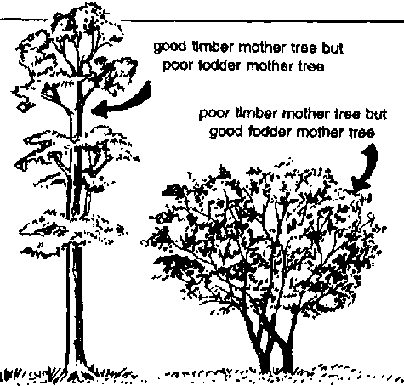
Picture 1
Survey the area for potential mother trees. A good mother tree should be vigorous, healthy, with abundant and healthy fruits and of good growth and form representing the purpose for which it is grown (i.e., for timber, fodder or fruit). Collect only from mature and healthy trees. Avoid very young trees or plants.
Also, avoid choosing an area where only few trees of the same species grow, especially if they are naturally cross pollinating. A large population gives a better chance of selecting good mother trees. Avoid collecting in stands with numerous poorly-formed, off-colored, abnormal o_r disease-infected trees. Collect fruits/seeds from trees standing in the center of the field. Make sure that seeds come from many trees of the same kind and quality to ensure that the seedlot contains all the representative characteristics of the variety.
METHODS OF FRUIT/SEED COLLECTION
1. From the ground
Collecting fruits/seeds from the ground is common especially for large-fruited species or species with seeds that are naturally dispersed. Although convenient, this practice increases the risk of collecting immature, empty, decayed/deteriorated and sprouted/germinated seeds. Identifying the source of seeds (mother trees) would also be difficult, especially when crowns of trees are interlocking.
Some points to consider in collecting fruits/seeds from the ground:
· Gather sound fruits and seeds right after they have fallen. Avoid collecting first fruits that fall during the season as they are often of poor quality.
· Shedding of mature fruits/seeds may be induced by shaking the trunks of small trees. Long poles, aided by hooks and ropes, could be used for taller trees. Lay a mat on the ground to avoid seeds from touching the ground and to facilitate collection.
Examples of seeds that can be collected from the ground:
· heavy, fleshy fruits
kaatoan bangkal (Anthocephalus chinensis), kamagong (Diospyros phi/ippensis), santol (Sandoricum koetjape), pangi (Pangium edule)
· medium-sized fruits with hard kernel
lumbang (Aleurites moluccana), bagilumbang (Aleurites trisperma), yemane (Gmelina arborea), teak (Tectona grandis), talisay (Terminalia catappa), kalumpit (Terminalia microcarpa), bitaog (Calophyllum inophyllum), pill (Canarium ovatum)
· large pods
fire tree (Delonix regia), rain tree (Albizia saman), antsoan (Cassia javanica), sampalok (Tamarindus indica), ipil (Intsia bijuga), tindalo (Afzelia rhomboidea), dapdap (Erythrina spp.)
· large capsules
mahogany (Swietenia macrophylla), kalumpang (Sterculia foetida)
· large winged fruits
narra (Pterocarpus indicus), dipterocarps
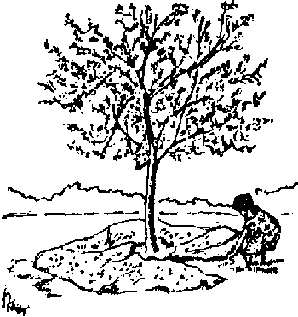
Picture 2
2. From standing
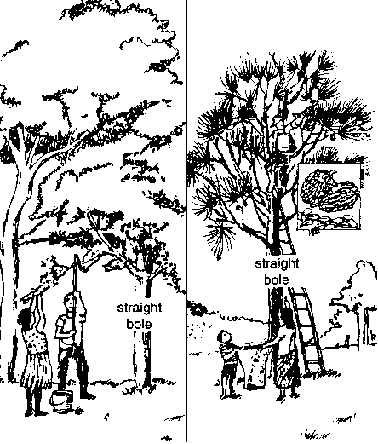
Picture 3
Direct access from the ground. Pick fruits/seeds from the lower branches by hand. Bend, cut, break or saw branches. Examples are: calliandra (Calliandra calothyrsus), madre de cacao (Gliricidia septum), rensoni (Desmodium rensonii), sesbania (Sesbania rostrata) and katurai (Sesbania grandiflora).
Climbing trees. Pick fruits/seeds from higher branches by climbing up the trees. This technique assures seed collection from well-identified mother trees. It is also applicable for small-seeded species, winged seeds, fruits/pods that split open when mature, or fruits/seeds that are prone to insect, rodent and mold attack on the ground. Examples are: (1) small berries or drupes (e.g., Eucalyptus species, bottlebrush); (2) leguminous species which open their pods on the tree (e.g., ipilipil Leucaena spp., Moluccan sau Paraserianthes falcataria, kamachile Pithecellobium dulce, tanglin Adenanthera intermedia); and, (3) small, winged, wind-disseminated seeds (e.g., Benguet pine Pinus kesiya, Mindoro pine Pinus merkusii, Japanese alder Alnus japonica, agoho Casuarina equisetifolia, dita Alstonia scholaris, African tulip Spathodea campanulata, kalantas Toona calantas, banaba Lagerstroemia speciosa).
Special skills and support equipment (like ladders, climbing iron with spikes, safety belts) are needed to access fruits from higher parts of the tree.
3. From crowns of felled trees
Collection of seeds from felled trees is easier and usually a lot quicker. However, this should be avoided as much as possible since this could lead to significant reduction in tree population and expose the soil to erosion.
TIMING OF SEED COLLECTION
1. Collect fruits/seeds at about mid-moming or midafternoon when it is sunny and not windy. This avoids pod shattering or obtaining pods or seeds that are moist with dew.
2. Harvest fruits/seeds only from trees where most of the fruits are mature (i.e., avoid overmature and immature ones). Do not collect seeds from fruits that flowered early or late.
3. To know when a fruit or seed is mature requires familiarity with the species. Some common indices of maturity are changes in size, texture and color (usually from green to various shades of yellow, red, purple, brown or black). Certain fruits dry up while others become soft and sometimes aromatic when ripe. Collect seeds from shattering fruits, cones or pods (e.g., pine, eucalyptus, ipil-ipil Leucaena spp., agoho, Moluccan sau, banaba, Acacia mangium, akle Serialbizia acle and Sesbania) before they dry up and shed or when still greenish or yellowish in color. Maturity of those with closed cones or fruits, e.g., Gmelina, can be assessed better by cutting through and examining the fruit. Collection of green or yellow fruits would also minimize fermentation during temporary storage of unextracted seeds.
RECORD-KEEPING
Mark mother trees for future collection. Record the site, location of trees within site and date of collection. This will serve as reference in evaluating performance of seedlots in relation to origin and seed source (provenance) as well as predicting seed longevity.
TABLE 1. SAMPLE SEED COLLECTION SCHEDULE OF SOME COMMONLY USED AGF SPECIES.
|
SCIENTIFIC NAME |
COMMON NAME |
COLLECTION SCHEDULE |
|
Acacia auriculiformis |
Auri |
Ca(4,5); |
| | |
Dv(5,7, 12); |
| |
|
In(11,1,2,3,4); |
| |
|
I(1,2,3,4); |
| |
|
L(4,5); M(2-5); |
| |
|
N(4,5) |
|
Acacia mangium |
Mangium |
In(12); I(1-4) |
|
Albizia falcalari |
Moluccan sau |
C(6,7); Dv(6) |
|
Albizia lebbek |
Langil |
L(2) |
|
Albizia lebbekoides |
Kariskis |
In(1,2,5) |
|
Albizia procera |
Akleng parang |
A(2-5); |
| | |
Be(4,5, 11); |
| |
|
Is(3); Lu(2); |
| |
|
Bt(4,5,6); Bu(1); |
| |
|
Me(1); M(1); |
| |
|
Ne(2); Z(1) |
|
Aleurites moluccana |
Lumbang |
C(6); Nv(11,12); |
| |
|
L(6,B,9); Ag(4); |
| |
|
N(1,2); Ce(8,9); |
| |
|
Bo(4,5); Dv(6-7) |
|
Anthocephalus chinensis |
Kaatoan bangkal |
L(B,9), MM(8,9); |
| |
|
Bo(8); Es(1,12); |
| |
|
M(11-12); S(1); |
| |
|
C(9); |
|
Azadirachta indica |
Neem tree |
P(6,7,8) |
|
Bixa arellana |
Achuete |
MM(12, 1,2, 3,4); |
| |
|
M(14) |
|
Cajanus cajan |
Kadios |
M(12,2,4); |
| | |
Bt(4,5); |
| | |
L(1,2,3,4, 12); |
|
Cananga odorata |
Ilang-ilang |
Nv(5); Bo(11); |
| |
|
L(3,4); S(7,8); |
| |
|
Io(9) |
|
Cassia spectabilis |
Antsoan dilaw |
Bo(5,6); Z(1); |
| |
|
L(3,4); Ma(1,2); |
| |
|
I(4,5); Io(4); |
| |
|
NV(1,5); A (4) |
| |
|
Lu(3,4); |
|
Casuarina equisitifolie |
Agoho |
A(2,5); Be(9); |
| |
|
Is(3,4,9); M(3 |
| |
|
Lu(1,2); Bl(9); |
| |
|
Pn(2,5,6); |
| | |
Ne(1,2); Io(7) |
| |
|
Me(1,2); |
| | |
Sy(3,7,8); |
| | |
Pa(1,2); Z(2); |
| |
|
P(3,10); Q(3,9 |
| |
|
Sn(7,8), N(1,2 |
| |
|
S(4); Le(1,2); |
| |
|
C(5,6); Nv(5,6 |
| |
|
Bo(5,8); Po(9 |
| |
|
L(4,5,10); |
| | |
Ma(8); N(1,2); |
| |
|
Ce(8,9); T(1,9 |
| |
|
S(4,5,6); |
| | |
Za(1,2,3); |
|
Ceiba pentandra |
Kapok |
Ce(9); L(3); |
| |
|
Io(3); Dv(4); |
| |
|
M(3-4); Is(1) |
|
Delonix regia |
Fire tree |
Pa,L,Ca,An,N |
| |
|
(11,12); Ag(10); |
| |
|
Za(5); Ba(9); |
| |
|
Ca(8); Io(10); |
| |
|
N(1); Cs(1); |
| |
|
Nv(4); Is(3,4); |
| |
|
Lu(3,4); |
|
Diospyros philippensis |
Kamagong |
L(7,8,9,10); |
| |
|
Co(1-12); |
| | |
Ba(9,10,11,12); |
| |
|
Mi(3-12); |
| | |
Le(4-11), N(3- |
| |
|
12); Ca(4,5,6) |
|
Erythina orientalis |
Dapdap |
L(4-8); Io(10) |
|
Erythrina variegate |
Mottled leaf dapdap |
MM(11-4) |
|
Gliricidia septum |
Kakawate |
Ce(4); Bo(4,12); |
| |
|
C(7); is(4,5,6); |
| |
|
In(4,5,6); A(6); |
| |
|
Lu(4,5,6); |
| | |
Pn(4,5,6); |
| | |
Ce(5); Ne(3); |
| |
|
Bu,Pa(4,5,6); |
| |
|
Io(4); M(2-5) |
|
Gmelina arborea |
Yemane |
Nv(3,4,5,6); |
| |
|
A(7); S(6,7); |
| |
|
N(2,3,4,5,6); |
| |
|
Za(3); Ag(4); |
| |
|
T(4,6); Io(12); |
| |
|
Dv(9-10); M(3 |
| |
|
6); C(5,6) |
|
Intsia bijuga |
Ipil |
C(6,7,8,12); |
| |
|
Nv(12); Ba(1,7); |
| |
|
L(1,3,11,12); |
| |
|
M(6,8,10,11,12); |
| |
|
P(2,6,8,12); |
| |
|
Ro(4); Nc(3,6); |
| |
|
Bs(12); Sy(4); |
| |
|
Pa(10); Bt(1,7); |
| |
|
Mp(12) |
|
Lagerstroemia speciosa |
Banaba |
A(2); Be(12); |
| |
|
Is(12); Lu(2); |
| |
|
Pn(4); Bt(5); |
| |
|
C(3,5); Nv(10); |
| |
|
Bt(5,7, 11); |
| |
|
Bu(6); Ne(9); |
| |
|
L(9-12); |
| | |
Ma(1,2,3); P(6); |
| |
|
Q(3,4,1 0); |
| |
|
R(2,12)); Cs(5); |
| |
|
An(11,12); Io(8); |
| |
|
Bo(6); S(1,2); |
| |
|
Le(1); Ag(9); |
| |
|
Mi(5); So(4,5); |
| |
|
M(2, 10-12); |
| |
|
S(2); Lu(1); |
|
Leucaena leucocephala |
Ipil-ipil |
* |
|
Melia dubia |
Bagalunga |
* |
|
Moringa oleifera |
Malunggay |
* |
|
Peltophorum pterocarpum |
Siar |
Ba(7); Ne(9); |
| |
|
L(9); P(9); |
| |
|
Dv(8-10) |
|
Piliostigma malabaricum |
Alibangbang |
N(3,4); T(1,2,9); |
| |
|
L(8,9); Io(4,5) |
|
Pinus kesiya |
Benguet pine |
Be(1,5.6,9,12); |
| |
|
Ne(2) |
|
Pterocarpus grandiflora |
Prickly narra |
K(5,6); In(11); |
| |
|
Lu(2); L(5,7); |
| |
|
Bu(1); Nv(8,9); |
| |
|
Ne(1,9); L(7 |
| |
|
11); M(3); Dv(9 |
| |
|
10); Me(4); |
| |
|
Io(3,4); Ce(7); |
| |
|
Bo(11,12); Io(8) |
|
Pterocarpus indicus |
Smooth narra |
A(6,10); Lu(2); |
| |
|
Pa(10); T(7); |
| |
|
L(7,8); Ce(7); |
| |
|
Ma(7,3, 10); |
| |
|
M(9); R(9); |
| |
|
Bn(4); Q(7); |
| |
|
Cs(6,7); Me(4); |
| |
|
So(6); lo(3,4); |
| |
|
N(12); Dv(9-10); |
| |
|
Bo(11,12); S(4,5); |
| |
|
Zs(6); Ag(6,7,8); |
| |
|
Mr(11,12); Io(8); |
|
Sesbania grandiflora |
Katurai |
* |
|
Swietenia macrophylla |
Mahogany |
A(1,2,3); |
| | |
Is(2, 12); |
| | |
Lu(2,12); C(2,3); |
| |
|
Nv(1,2,3,12); |
| |
|
T(12); L(1,2); |
| |
|
Ma(8); Io(3); |
| |
|
N(2,3); Ce(2); |
| |
|
Bo(1,2,3); |
| | |
S(2,12); Za(3); |
| |
|
Ag(3); Bn(2); |
| |
|
Sn(6,7,8); |
| | |
Io(12,1); Dv(7 |
| |
|
8); M(10-12) |
|
Tectona grandis |
Teak |
A(10,11,12); |
| |
|
Mp(10,11); |
| | |
Lu(1,5); C(2,3); |
| |
|
Nv(2,4,5); |
| | |
Pa(1,2); |
| | |
T(1,2,12); |
| | |
L(5,6); R(10); |
| |
|
Ce(4); Io(3,4); |
| |
|
N(3,4); Bo(1,2); |
| |
|
S(1,11,12); |
| |
|
Za(3,6); Ag(2); |
| |
|
Su(1); Mr(2,3,4); |
| |
|
Co(11); Io(3); |
| |
|
Dv(9) |
|
Terminalia catappa |
Talisai |
Nv(6,8); T(2,3); |
| |
|
Ma(8,9, 10); |
| |
|
Io(8) |
|
Trema orientalis |
Anabiong |
L(9) |
|
Vitex parviflora |
Molave |
A(1,2); Be(8); |
| |
|
Is(9); Lu(10); |
| |
|
Pn(2,4); Nv(1); |
| |
|
Ba(8,10); Bu(7); |
| |
|
L(9, 10); |
| | |
Ma(11, 12); |
| |
|
M(1); Me(10); |
| |
|
Ne(3,4,8); |
| | |
Io(3);Ce(1); |
| |
|
Bo(5); Si(12); |
| |
|
Le(2); Bs(9); |
| |
|
Za(9); Ag(9); |
| |
|
Mi(4); So(2,7); |
| |
|
Dv(5); Co(5,6); |
| |
|
Lo(10); Io(12); |
| |
|
Dv(9) |
Note: Prepared by Remedios Evangelista of the DENR. More information on the collection schedule and on the occurrence of species, including other common or local names, can be found in Agroforestry Seeds Circular Supplement (June 1991 and January 1992 issues). The materials include about 300 species.
LEGEND:
1 - January
2 - February
3 - March
4 - April
5 - May
6 - June
7 - July
8 - August
9 - September
10 - October
11 - November
12 - December
* - year round and all throughout the country
A - Abra
Ag - Agusan
An - Antique
Ba - Batangas
Be - Benguet
Bl - Baler
Bn - Bukidnon
Bo - Bohol
Bs - Basilan
Bt - Bataan
Bu - Bulacan
C - Cagayan
Ca - Cavite
Ce - Cebu
Co - Cotabato
Cs - Camarines
Dv - Davao
Es - Eastern Samar
I - Isabela
In - Ilocos Norte
Io - Iloilo
Is - Ilocos Sur
K - Kalinga Apayao
L - Laguna
Le - Leyte
Lo - Lanao
Lu - La Union
M - Mindoro
Ma - Marinduque
Me - Masbate
Me - Misamis
MM - Metro Manila
Mp - Mountain Province
Mr - Misamis Oriental
N - Negros
Nc - Negros Or;c.
Ne - Nueva Ecija
Nv - N. Vizcaya
P - Palawan
Pa - Pampanga
Pn - Pangasinan
Po - Polilio
Q - Quezon
R - Rizal
Ro - Romblon
S - Samar
Si - Siquijor
Sn - Sorsogon
So - Surigao
Sy - Sibuyan
T - Tarlac
Z - Zambales
Za - Zamboanga
Zs - Zamboanga del Sur
|
| ||||||||||||||||||||||||||||||||||||||||||||||||||||||||||||||||||||||||
Seed processing
EXTRACTION
A. For dry fruits (pods and cones)
Sun-dry over concrete, canvas sheets or cloth sacks until pods split open. Placing the pods on a wire mesh with an accompanying container at the bottom is also a good technique. The container will catch the seeds when the pods split open.
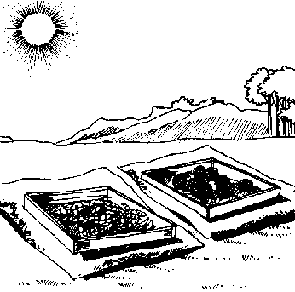
Picture 4
Trample with feet, toss around or beat pods inside a sack to speed up seed separation. Open manually or mechanically pods/cones which do not easily split open.
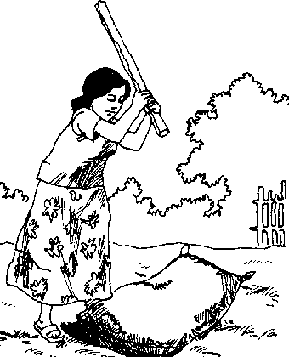
Picture 5
Clean seeds by blowing or winnowing.
To get cleaner and better quality seeds, immerse seeds in a container of water for one to several hours. Discard those that float. Drain and redry the remaining seeds well. Avoid soaking seeds for too long as this may cause fermentation. Soaking should also be avoided for seeds which rapidly expand to avoid damage. When seeds are to be planted immediately, redrying may be omitted.
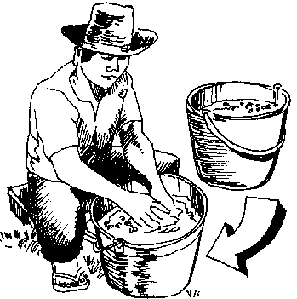
Picture 6
B. For fleshy fruits
If possible, extract seeds only upon arrival at the collection center. Do not delay extraction for too long and never store fruits piled-up and undisturbed, as heating and fermentation may kill the seeds or reduce their quality.
Seeds in fleshy fruits may be extracted manually or made to undergo a depulping process. This process entails the following steps:
1. Immerse fruits in water for 1-2 days until the fleshy tissue becomes soft.
2. Scrape, crush or nub lightly with hands to separate seeds thoroughly from pulpy flesh, but avoid injuring the seeds.
3. Discard all floating seeds and pulp (most seed species are sinkers.
4. Drain seeds, rewash and air-dry for 1-2 days before sun-drying.
5. Winnow to dean.
Examples of species with fleshy fruits that need depulping: Aleurites spp., Canarium ovatum, Syzygium cumin), Gmelina arborea, Azadirachta indica, Ocotea usembarensis and Cinnamomum camphora.
For some species which have seeds covered only by thin layer of flesh (e.g., Vitex parviflora), the fruit itself may be kept intact, dried and directly sown. However, germination may be further improved by removal of the pulp.
DRYING OF SEEDS
Sun-dry the extracted, cleaned seeds for 1-3 days (depending on the weather and on how wet the seeds are) if seeds will be stored for future use. Airdry washed or wet seeds for 1-2 days before sundrying.
1. Lay a mat, canvas, light-colored plastic sheet, winnowing basket or screen on the ground where the sun shines all day.
2. Spread the seeds thinly and evenly.
3. Stir and turn the seeds 4-5 times a day for uniform drying. If possible, keep seeds (especially moist ones) shaded during intense heat (noon to 2:00 p.m.).
4. Before it rains or gets dark, take the seeds indoors.
The same drying procedure may be used for seeds of most fruit trees. Exceptions are seeds of lanzones (Lansium domesticum), rambutan (Nephelium eappaceum), durian (Durio zibethinus), mangosteen (Garcinia mangostana), man go (Mangifera indica), jackfruit (Artocarpus heterophyllus), avocado (Persea americana), rubber (Manihot glaziovii), cacao (Theobroma cacao) and Dipterocarpus spp. These should not be sun-dried but may be air-dried for a day or two before storing or they must be planted immediately after extraction.
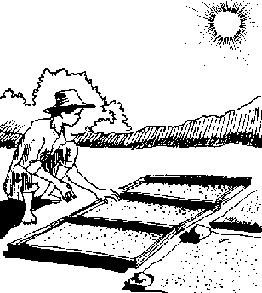
Picture
7
|
| ||||||||||||||||||||||||||||||||||||||||||||||||||||||||||||||||||||||||
Seed quality testing
The quality of a seedlot determines how well seeds store or perform in the field. To assess the quality of a seedlot, draw a sample from a properly stirred or mixed seedlot and conduct any of the following tests:
Picture 8
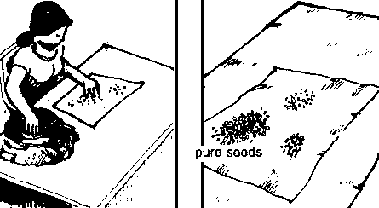
VISUAL INSPECTION
Seed purity is a measure of the cleanness and authenticity ('trueness-to-type") of the seedlot. It may be known by inspecting the composition of a particular sample.
1. Scoop out a handful of seeds from a well-mixed seedlot.
2. Separate the seeds of interest (pure seed fraction) from other components like seeds of other varieties and/or species (including weeds), immature, broken, undersized, shriveled, diseased (with molds/fungus or fungal stains) and infested seeds (with holes, insects' eggs and larvae, or are partly eaten by insect), chaff, stone, soil, etc. If a large portion of the sample consists of impurities, clean the seedlot first before storing, shipping or planting.
FLOTATION
1. Most seed species sink in water and flotation serve to separate seeds of poor quality. Soak seeds in tap water until all seeds are thoroughly wet. This may take a few minutes to a day.
2. Take out floating seeds and retain sinkers. Poor quality (low viability) seeds often float while those of better quality often sink. However, some species are natural floaters (e.g., coconut, nipa and teak); hence, quality must be assessed through other means.
GERMINATION TEST
Seed germination is the most reliable method of determining seed viability. However, this takes some time before results can be obtained. Aside from the problem of slow germination, some alive seeds are dormant and need special treatments to promote germination. Germination results of samples without any pre-germination treatment will serve as guide in determining the amount of seeds to plant or the need for any pre-germination treatment of the seedlot.

Picture 9
1. Sow 50-200 small seeds in moist, clean and absorbent paper or cloth. Roll the paper or cloth loosely (ragdoll method) or keep the medium flat but covered (usually with another layer of the same material). Larger seeds like Gmelina are better sown in a seedbox or seedbed containing soil, sand or sawdust for more even seed wetting.
2. Keep the media moist by constant watering, but take care not to displace the seeds or to flood the medium. If wooden soil/sandboxes are used, the media may be kept moist by letting the container sit in a bigger container with water. Paper or cloth media may also be maintained moist by keeping in a partially opened plastic bag. Keep in the shade (no direct sun and away from mice, ants and rain.
3. Count normal seedlings after 1 to 3 weeks depending on species. Normal seedlings are those with well-formed roots and shoots. Percentage germination (G) is calculated as:
G = (No. of normal seedlings) / (Total no. of seeds tested) x 100
Seeds with a germination percentage of 50 percent or less should either be planted immediately or replaced in storage. The lower the germination of seed samples, the poorer is the storability or field performance of the seedlot.
RAPID VIABILITY TEST
The Tetrazolium Chloride (TTZ) test is a quick method of testing seed viability (1-2 days) This is usually resorted to when seed germination takes more than a month or when quick assessment about the seedlot needs to be made The TTZ may be purchased from chemical stores in 5 or 10 9 bottles costing about P1,400/10g bottle.
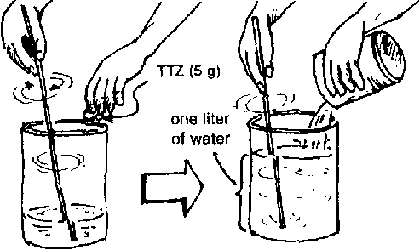
1. Preparation of solution
a. Dissolve 5 9 of TTZ in a liter of water (approximately 1 motor oil can). This volume is enough to use for 15-30 tests.
b. Keep the solution in a clean bottle wrapped in black sheet (use carbon paper or black plastic) and store in a refrigerator for longer effectivity. If a refrigerator is not available, prepare only the needed amount, maintaining the same proportions.
Picture 10
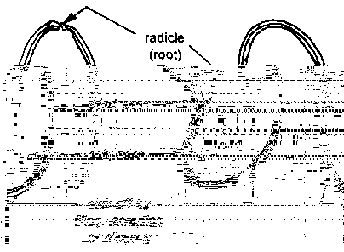
2. Sample enough seeds (100-200) from a well-mixed seedlot and soak overnight (8-12 hours). For species or seedlots with hard seeds, dip seeds in boiling (1-3 seconds) or hot (5-15 minutes) water, or nick off seedcoats (at the tip away from the radicle/root end or initial) before soaking in water.
3. Remove softened seedcoat. Carefully separate the cotyledons (expanded leaf-like structure) and retain the part with radicle for testing. For species with one cotyledon or with difficult to separate cotyledons, cut the seed lengthwise revealing all the essential parts.
4. Add enough TTZ solution to thoroughly immerse the seeds. Cover the set-up with a black sheet and let stand for 3-6 hours under ordinary room condition. Other species may require longer soaking time (820 hours) for a more thorough reaction.
5. Drain the solution, rinse seeds with water and spread in a wide container with water (enough to cover the seeds) to allow individual seed inspection.
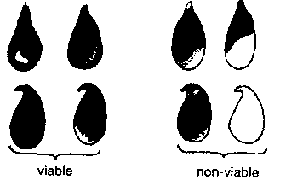
6. Seeds with completely colored bright red tissues are alive. Some seeds with unstained parts are also viable if more than one half of the cotyledon from the radicle end is bright red, if unstained parts do not include those that would develop into roots (radicle) and shoots, or if only 1/3 or less of the radicle from the tip is unstained. Percentage viability (V) is taken as percentage of seeds judged germinable through TTZ and would reflect that of the original seedlot. It is calculated as:
V = (No. of viable seeds) / (Total no. of seeds tested) x 100
Interpretation of TTZ results is subjective and needs considerable experience. Viability estimated through TTZ is often slightly higher than actual germination.
Picture 11
SEED MOISTURE TEST
The amount of moisture in the seed determines how fast the seed deteriorates and how long it can be stored Moisture determination is necessary, especially in seedlots whose drying and/or storage history is unknown, to know if further drying is needed before packaging, storage or shipping. The general rule is that seeds will have approximately 12 percent moisture if dried for 2-3 days in the sun. Oven-drying with controlled temperature is the most common technique to determine moisture but is not practical at the farm level. Practical approximations of seed moisture include biting (not recommended especially if seeds are treated), pinching or cracking of seeds, depending on the species.
|
| ||||||||||||||||||||||||||||||||||||||||||||||||||||||||||||||||||||||||
Hastening seed germination
Many agroforestry species have hard seed coats which are impermeable to water and air or which prevent the emergence of seed parts. Hardseededness tends to be promoted with delayed harvesting and prolonged drying. Hastened seed germination is essential for rapid and uniform seedling establishment and to shorten the time of exposure of seedlings to pests and other stresses. The following procedures are some pre-germination treatments which may be carried out singly or in combination to enhance germination of hardseeds.
TAP WATER TREATMENT
Soak seeds in tap water for 1248 hours (depending on species) before planting. Sow only seeds that absorb water. If a large portion does not absorb water, other treatments should be used.
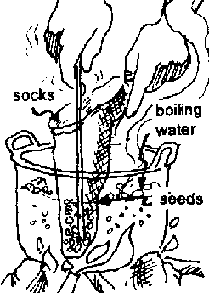
BOILING WATER TREATMENT
1. Place seeds (and a stick to stir them with) in cloth bags or used socks.
2. Dip and stir seeds in boiling water (5-10 parts water to 1 part seed) for 3-15 seconds. Longer time is needed for seedlots with thicker coats or with more hardseeds. Boiling water may also be poured into a container with seeds.
Picture 12
HOT WATER TREATMENT
1. Pour hot water (boiling water allowed to cool for about 10-15 minutes) into a container with seed (10 parts water to 1 part seed).
2. Let stand for 3-10 minutes or until water cools off. Seeds may be left soaked overnight in cold or tap water.
MECHANICAL SCARIFICATION
Nick-off seedcoat with a knife or nailclipper, or rub with sandpaper, file, or any rough material, taking care not to injure the internal portion especially the radicle (rootend). This technique is practical only for small seedlots.
SCARIFICATION
|
| ||||||||||||||||||||||||||||||||||||||||||||||||||||||||||||||||||||||||
Seed treatement for better and faster germination
| | | |
DAYS TO GERMINATION |
DAYS GERMINATION |
|
SCIENTIFIC |
COMMON |
TREATMENT/ |
(WITH TREATMENT/ |
(WITHOUT TREATMENT/PREPARATION) |
|
NAMES |
NAMES |
PREPARATION |
PREPARATION) | |
|
Acacia anuera |
Anuera |
Soak in tap water for 20-30 minutes. |
not indicated |
not indicated |
| |
|
Immerse in boiling water until it cools. | |
|
|
Acacia auriculiformis |
Auri, Japanese Acacia |
Immerse in boiling water for 30 seconds to 1 minute and soak overnight in cool water. |
3-8 |
7-10 |
| | |
Immerse in hot water for 3-10 minutes and soak overnight in tap water. | | |
| |
|
Immerse in boiling water for 520 seconds and soak in tap water for 24 hours. | | |
|
Acacia confuse |
Ayangile |
Immerse in boiling water for 5-10 seconds. |
not indicated |
not indicated |
|
Acacia mangium |
Mangium, Hickory wattle |
Immerse for 30 seconds in boiling water and soak overnight in cold water. |
3-6 |
5-30 |
| | |
Immerse in boiling water for 5-20 seconds and soak in tap water for 24 hours. | | |
|
Acacia villosa |
Villosa |
Scarify mechanically. |
4-8 |
8-12 |
| | |
Soak in tap water for 49 hours. | | |
|
Adenanthera microsperma |
Saga, Java tanglin |
Scarify mechanically. |
8-10 |
10-20 |
| | |
Immerse in boiling water for 5 seconds. | |
|
|
Agathis dammara (A. philippinensis) |
Almaciga, Manila copal |
Soak in cold water for 24 hours. |
not indicated |
not indicated |
|
Albizia julibirissin |
Silk tree |
Immerse in boiling water for 5-20 seconds and soak in tap water for 24 hours. |
not indicated |
not indicated |
|
Albizia lebbek |
Langil, Black ebony |
Immerse in boiling water for 2 minutes and soak overnight in tap water. |
3-10 |
not indicated |
| |
|
Immerse in hot water and soak for 24 hours. | |
|
|
Albizia lebbekoides |
Kariskis |
Soak in hot water, let cool and soak overnight. |
3-4 |
not indicated |
|
Albizia procera |
Akleng parang |
Immerse in boiling water for 5 seconds and soak overnight in cold water. |
5-10 |
16-25 |
| | |
Immerse in boiling water for 2 minutes and soak overnight in tap water. | | |
| |
|
Soak in tap water for 2448 hours. | | |
|
Albizia saman (Samanea saman) |
Acacia Raintree |
Immerse in boiling water for 24 hours and soak in tap water until it cools off. |
7-15 |
16-25 |
| | |
Immerse in hot water for 3 minutes and soak overnight in cold water. | | |
| |
|
Soak in ethyl alcohol for 4 hours with occasional stirring. | | |
|
Aleurites moluccana |
Lumbang, Candle nut tree |
Mix 2 parts of seeds with 1 part mud. Cover container with jute sack and expose to direct sunlight for 30 days. |
10 |
not indicated |
| |
|
Peel, nick or crack the shell. | | |
|
Alnus species |
Alder |
None required |
- |
10-22 |
|
Anacardium occidentale |
Cashew, Kasuy |
Remove remaining tissue at point of attachment to flesh |
11-14 |
14-17 |
|
Annona muricata |
Guyabano, Soursop |
Soak overnight, air-dry and store at room condition for 1 month. |
17-20 |
18-60 |
|
Annona squamosa |
Atis, Sweetsop |
Air-dry and store at room condition for 3 weeks. |
11-20 |
20-30 |
|
Anthocephalus chinensis |
Kaatoan bangkal |
None required |
- |
21-28 |
|
Artocarpus camansi |
Kamansi |
None required |
- |
10-15 |
|
Artocarpus heterophyllus |
Langka, Jackfruit |
Remove seed coat, wash and soak in cold water for 24 hours. |
3-5 |
14 |
|
Artocarpus odoratissima |
Marang |
None required |
- |
14-22 |
|
Averrhoa bilimbi |
Camias |
Wash slimy covering and air-dry. |
5-7 |
7-10 |
|
Averrhoa carambola |
Balimbing, Starfruit |
Remove slimy covering and air-dry. |
11-25 |
20-40 |
|
Azadirachta indica |
Neem |
Soak in tap water for 3-6 days. |
7-15 |
not indicated |
|
Bambusa blumeana |
Kawayan tinik, Thorny bamboo |
Soak in cold water for 48 hours. |
not indicated |
not indicated |
|
Bauhinia purpurea |
Fringon morado hours. |
Soak in tap water for 24 |
4-8 |
18 |
|
Bixa orellana |
Achuete, Annatto |
None required |
- |
7 |
|
Cajanus cajan |
Kadios, Pigeon pea |
None required |
- |
4-6 |
|
Calamus merrilli |
Rattan, Palasan |
Scarify mechanically |
3-7 |
45 |
| | |
Remove hilum. |
| |
|
Calliandra calothyrsus |
Calliandra |
Immerse in hot water and soak in tap water for 24 hours. |
3-6 |
7-12 |
| | |
Soak in cold/tepid water for 24 | | |
| | |
Immerse in boiling water for 2 minutes and soak overnight in tap water. | | |
|
Cananga odorata |
Ilang-ilang |
Soak in hot water for 24 hours. |
less than 60 |
60-80 |
|
Canarium ovatum |
Pili, Pili nut |
None required |
- |
30-45 |
|
Carica papaya |
Papaya |
Remove gelatinous material, wash clean and air-dry. |
10 |
14-21 |
|
Cassia fistula |
Golden shower |
None required |
- |
7-14 |
|
Cassia occidentalis |
Cassia seconds. |
Immerse in boiling water for 5 |
1-3 |
3-5 |
|
Cassia siamea |
Balayong tindalo, Thailand shower |
Immerse in hot water and soak for 12-24 hours. |
3-7 |
12-17 |
| | |
Soak in cold/tepid water for 48-72 hours. | |
|
|
Cassia spectabilis |
Antsoan-dilau |
Immerse in boiling water for 3 seconds |
8-12 |
14-30 |
| | |
Soak in hot water for 12 hours. | | |
| | |
Immerse in boiling water for 5-20 seconds and soak in tap water for 24 hours. | | |
|
Casuarina equisetifolia |
Agoho, Casuarina |
None required |
- |
7-21 |
|
ChrysophyIlum cainito |
Caimito, Starapple |
None required |
- |
18-40 |
|
Citrus grandis |
Lukban, Suha, Pomelo |
Wash slimy materials and air-dry. |
16-20 |
not indicated |
|
Citrus madurensis |
Kalamansi, Kalamondin |
Wash slime from seeds and air-dry. |
5-10 |
not indicated |
|
Cocos nucifera |
Coconut, Niyog |
Place nuts 2/3 into soil with wide segment down. |
not indicated |
70-160 |
|
Coffee arabica |
Kape, Coffee |
Remove parchment and soak in cold water for 24 hours. |
30 |
3045 |
|
Corypha utan (C. elata) |
Buli, Buri palm |
Remove hard fibrous seed. |
14-30 |
70-80 |
| | |
Remove hilum. |
| |
|
Crotalaria pallida (C. arincana) |
Crotalaria |
None required |
2-8 | |
|
Delonix regia |
Fire tree |
Immerse in boiling water for 10 seconds. |
12-20 |
15-25 |
| | |
Soak in cold/tepid water for 24 hours. | |
|
|
Desmodium discolor |
Desmodium |
Immerse in boiling water for 5 seconds. |
3-6 |
5-9 |
|
Desmodium rensonii |
Rensoni |
Immerse in boiling water for 10-20 seconds. |
3-6 |
5-8 |
|
Diospyros philippinensis |
Mabolo, Kamagong, Talagang |
Scarify mechanically. |
10-14 |
16-20 |
| | |
Soak in tap water for 2448 hours. | | |
| | |
Soak in boiling water for 5 minutes. | |
|
|
| |
Soak in hot water (50°C) for 30 minutes. | | |
|
Durio zibethinus |
Durian, Civet fruit |
Remove aril. |
8-17 |
not indicated |
|
Endospermum peltatum |
Gubas Soak in tap water for 12 hours. |
25-45 |
not indicated |
|
|
Erythrina indica |
Dapdap, Anii, Rarang |
Soak in cold/tepid water for 24 hours. |
10-15 |
20-25 |
|
Eucalyptus rostrata (E deglupta) |
Bagras, Eucalyptus |
None required- |
- |
3-8 |
|
Flemingia macrophylla |
Flemingia |
Soak in tap water for 48 hours. |
3-7 |
5-10 |
| | |
Immerse in boiling water for 3-10 seconds. | |
|
|
| |
Immerse in hot water for 1 minute. | | |
|
Garcinia mangostana |
Mangosteen |
Remove flesh and fiber, use large seeds weighing 1 gram or more for greater viability and survival. |
20-30 |
more than 30 |
|
Gliricidia septum |
Kakawate, Madre de Cacao, Ouick stick |
Soak in hot water for 30 seconds and cool overnight. |
5-7 |
9-12 |
| | |
Scarify mechanically. | | |
| | |
Soak in tap water for 24 hours. | | |
|
Gmelina arborea |
Gmelina Yemane, Paper tree |
Soak in cold/tepid water for 48 hours. |
6-14 |
2040 |
| | |
Soak in tap water for 24 hours. | | |
| | |
Soak in hot water for 10 minutes. | | |
| | |
Imbibe in dark, moist sand for 30 days. | |
|
|
Hopea foxworthyii |
Dalingdingan |
Remove wings. |
2 |
not indicated |
|
Indigofera tinctoria |
Tayum, Indigofera |
None required |
- |
2 |
|
Intsia bijuga |
Ipil Moluccan iron wood |
Soak for 15 to 24 hours. |
2-5 |
7-14 |
| | |
Nick seedcoat |
| |
|
Lansium domesticum |
Lansones |
Remove adhering tissue, wash and air-dry Use big, plump and heavy seeds (1 gram or more). |
8-15 |
13-16 |
|
Leucaena diversifolia (acid and hybrid) |
Acid ipil-ipil, Diversifolia |
Soak in hot water for 3 minutes. |
7-15 |
9-18 |
| | |
Immerse in boiling water for 5 seconds | |
|
|
Leucaena leucocephala |
Ipil-ipil Leucaena, Horse tamarind |
Soak in tap water for 36 hours. |
5-12 |
12-20 |
| | |
Immerse in hot water for 2-3 minutes and soak in water for 24-72 hours. | | |
| |
|
Immerse in boiling water for 2 minutes and soak overnight in tap water. | | |
| |
|
Soak in hot water for 12 hours. | | |
|
Livistona rotundifolia |
Anahaw, Fan palm |
Soak for 24 hours. |
2-3 |
not indicated |
| |
|
Remove hilum cover. |
| |
|
Mangifera indica |
Mango, Mangga |
Remove husk to improve quality and uniformity of seedlings. |
10-15 |
36 |
|
Manilkara zapota (Achras zapota) |
Chico, Chickle tree |
Soak in tap water for 1-6 hours. |
18-20 |
16-44 |
|
Melia azedarach |
Paraiso, Umbrella tree |
Soak in cold/tepid water for 48 hours. |
not indicated |
not indicated |
| |
|
Scarify mechanically. | | |
|
Moringa oleifera |
Malungay, Horse radish tree |
None required |
- |
5-12 |
|
Nephelium lappaceum |
Rambutan |
Wash and clean free from adhering arils. |
not indicated |
11-17 |
|
Ormosia calavensis |
Bahai |
Soak in tap water for 48 hours. |
20 |
60 |
|
Paraseriantines falcataria (Albizia falcataria) |
Moluccan sau, Falcata, White albizia |
Soak in hot water and allow to cool for 12 hours. If water is not hot, extend cooling to 24 hours. |
2-5 |
8-10 |
| | |
Scarify mechanically. | | |
| | |
Immerse in boiling water for 520 seconds and soak in tap water for 24 hours. | | |
|
Parkia roxburghii |
Kupang |
Soak in hot water for 5 minutes. |
15-20 |
48 |
| | |
Scarify mechanically. | | |
|
Persea americana |
Avocado, Guacamole |
Remove seedcoat. |
18-28 |
21-42 |
|
Piliostigma malabaricum (Bauhinia malabarica) |
Alibangbang Butterfly tree |
Immerse in hot water for 2-3 minutes and soak overnight in tap water. |
4-6 |
5-8 |
|
Pinus caribaea |
Carribean pine |
Soak seeds in tap water for 24 hours and core in 45°C for 2-3 days. |
7 |
not indicated |
|
Pinus kesiya |
Benguet pine |
Soak in tap water for 6-24 hours. Remove floaters. |
4-7 |
14 |
|
Pithecellobium dulce |
Kamachile, Manila tamarind |
None required |
- |
5 |
|
Pouteria campechiana |
Tiessa |
Remove shell. |
21 |
49 |
|
Prosopis pallida |
Prosopis |
Soak in hot water. |
not indicated |
not indicated |
| |
|
Scarify mechanically. | | |
|
Psidium Bayabas Guava guajava |
Remove slime and air-dry. |
10 |
not indicated |
|
|
| |
Soak in boiling water for 5 minutes. | |
|
|
Pterocarpus indicus |
Smooth narra |
Soak in hot water (50°C) for 10 minutes. |
4-15 |
not indicated |
| |
|
Soak in hot water for 12 hours. | | |
| | |
Soak in boiling water for 3-5 | | |
| | |
seconds. | |
|
|
Pueraria javanica |
Kudzu |
Immerse in hot water for 1 minute. |
4-12 |
5-15 |
| | |
Soak for 24 hours. |
| |
|
Sandoricum koetjape |
Santol |
Rub seeds with sand to remove fibrus covering and wash well. Dry under shade. |
not indicated |
10-21 |
|
Serialbizia acle |
Akle |
Soak in trot water for 15 hours. |
less than 120 |
120 |
|
Sesbania bispinosa |
Prickly sesban |
Soak for 24 hours. |
5-8 |
6-10 |
|
Sesbania grandiflora |
Katurai |
Soak in cold/tepid water for 24 hours. |
not indicated |
not indicated |
|
Sesbania sesban |
Sesban |
Soak in cold/tap water for 24 hours. |
3-6 |
5-7 |
| | |
Immerse in hot water and soak overnight in tap water. | | |
|
Spondias purpurea |
Siniguelas, Saraguelas, Red Mombin |
Sterile seeds (use stem cutting) |
- |
- |
|
Swietenia macrophylla |
Large leaf mahogany |
Soak in hot water (50°C) for 5 minutes. |
8-14 |
14-28 |
| | |
Break off seed wings. | | |
|
Syzygium cumini |
Duhat, Black plum |
None required |
- |
10-21 |
|
Syzygium samarangense |
Macopa |
Wash, remove all adhering flash. |
10-12 |
12-25 |
|
Tamarindus indica |
Tamarind, Sampaloc |
None required |
10-14 | |
|
Tectona grandis |
Teak Yati |
Soak seeds in running water for 24-72 hours. Sundry for 1-2 days. |
14-68 |
90 |
| | |
Repeat soaking and drying for 12-14 days. | |
|
|
| |
Soak in boiling water for 48 hours and allow to stand in cold water for 24 hours. | | |
| | |
Pour boiling to hasten disintegration of seed cover. | | |
|
Terminalia ivorensis |
|
Alternate soaking and drying for 7 days. |
not indicated |
not indicated |
|
Theobroma cacao |
Cacao, Cocoa |
Remove mucilage by rubbing between hands or sand. |
less than 14 |
14 |
|
Trema orientalis |
Anabiong, Charcoal tree |
Immerse in lukewarm water for indicated 5-10 minutes. |
not indicated |
|
|
| |
Macerate and wash. |
| |
|
Vitex parviflora |
Molave |
Remove pericarp (hard covering) of fruit. |
5-10 |
10 |
|
Wikstroemia sp. |
Salago |
Scarify mechanically. |
7-20 |
more than 30 |
| |
|
Crack seed coat lightly. | | |
|
Ziziphus jujube |
Manzanitas |
None required |
|
30 |
|
| ||||||||||||||||||||||||||||||||||||||||||||||||||||||||||||||||||||||||
Seed storage and longevity
Seeds, even if adequately protected during storage, still undergo deterioration with time. Major factors affecting longevity (Iife-span) of mature, viable and healthy seeds are moisture, storage temperature and pests.
Most seeds are drying-tolerant (orthodox). Under ordinary room conditions (open storage), viability of these seeds is generally reduced by half within six months. Seeds with harder seed coats tend to live longer than those with thin coats. For improved storability, seed moisture and storage temperature must be kept low and controlled.
1. Store only new, mature, healthy and well-dried seeds, except for a few species which do not favor drying. Keep these in dry and cool environments for longer viability.
2. Seeds easily reabsorb moisture. To maintain dryness, place dried seeds in air-tight containers like tin cans or glass jars with tight-fitting lids and use some water-absorbing materials like sifted dry wood ash (white), dry charcoal, toasted rice (cooled), silica gel or pieces of newspaper (to occupy about a fourth of the container). Place a sheet of paper on top of these water absorbing materials if seeds are to be put directly into the container. Replace or redry these materials if containers are frequently opened. Fill the rest of the container with seeds. Plastic bags may be used to keep seeds dry if sealed by heat.
3. Label containers with the harvest and storage dates and place of harvest (or acquisition). If possible, also indicate the initial percentage viability or germination of seeds.
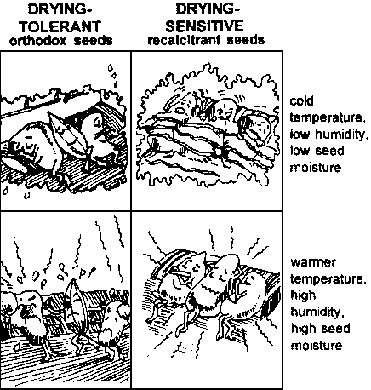
Picture 13
4. Dry seeds may be protected from insects by using naphthalene bails (1 or 2 pieces per kg seed) or by mixing seeds in the containers with some materials like fine sand, dry wood ash, powdered seeds of black pepper or neem, plant oils from coconut, neem, peanut, castor, cotton, etc., (one teaspoon of oil per kg seed).
A few species have seeds which are sensitive to drying and, often, also to cold temperature (recalcitrant). They have storabilities of only several days to a few months under ordinary room conditions in contrast to the drying tolerant or orthodox species. Recalcitrant characteristics are commonly found in many fruit, plantation and forest species (such as lanzones, rambutan, durian, mangosteen, mango, jackfruit, avocado, rubber, cacao and Dipterocarpus spp.)
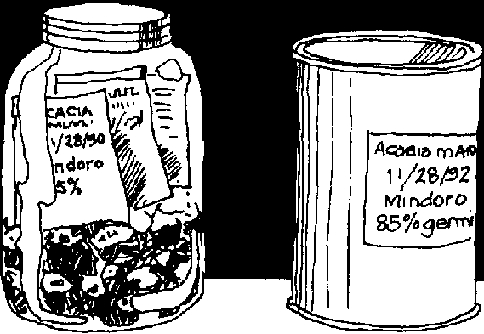
Picture 14
For slightly longer storabilities, keep these seeds wellcleaned and moist (1 to 2 days of air-drying is generally sufficient to keep the seed coat slightly dry but still moist inside). Store them in small batches in a cool room in inflated plastic bags (half-filled with seeds and opened once a day to prevent fermentation) or in perforated plastic bags. Moist charcoal, peat moss, sawdust, sand or coirdust may also be placed inside the bags. Moist storage for more than a week requires that seeds be protected from molds and bacteria. This may mean soaking seeds in a sterilant like the commercial bleach, chlorox (1 part chemical to 5 parts water) or applying anti-mold substances like fungicides or some plant extracts (try extracts of garlic cloves, acapulco leaves, malunggay leaves or achuete seeds). A temperature of 15 C is often used to further prolong storabilities and, to some extent, reduce infection. Recalcitrant seeds also need special attention during transport. The life time of seeds can be extended if extraction is deferred until seeds arrive at the collection site at which time care must be taken to avoid heating and/or fermentation of fruits by aeration or cooling.
|
| ||||||||||||||||||||||||||||||||||||||||||||||||||||||||||||||||||||||||
Agroforestry seed storage
|
SCIENTIFIC NAMES |
COMMON NAME |
STORAGE ENVIRONMENT |
STORABILITY |
DRYING |
| |
| | |
RESPONSE |
|
Acacia auriculiforrnis |
Japanese acacia, Auri |
Sun-dried, stored under ambient condition |
6-12 months |
Tolerant |
|
Acacia catechu |
Cutch tree, Black cutch |
Ambient temperature |
6-12 months |
Tolerant |
|
Acacia confuse |
Ayangile |
Sun-dried, stored under ambient condition |
3 months |
Tolerant |
|
Acacia dealbata |
Silver wattle |
Ambient temperature |
More than 2 years |
Tolerant |
|
Acacia decurrens |
Green wattle |
Ambient temperature |
More than 2 years |
Tolerant |
|
Acacia famesiana |
Aroma Sweet |
Ambient temperature |
1-2 years |
Tolerant |
|
Acacia mangium |
Mangium, hickory wattle |
Sun-dried, stored in air-tight containers under ambient condition |
Several years |
Tolerant |
|
Acacia meamsii |
Black wattle |
Ambient temperature |
1-2 years |
Tolerant |
|
Acacia melanoxylon |
Australian blackwood |
Ambient temperature |
1-2 years |
Tolerant |
|
Acacia modesta |
|
Ordinary room condition |
1-2 years |
Tolerant |
|
Acacia nilotica |
Egyptian acacia |
Ordinary room condition |
More than 2 |
Tolerant |
|
Acacia senegal |
|
Ordinary room condition |
1-2 years |
Tolerant |
|
Acacia tortilis |
Umbrella thorn |
Ordinary room condition |
1-2 years |
Tolerant |
|
Acer caesicum |
|
Refrigerated condition |
1-6 months |
Tolerant |
|
Acer campbellium |
|
Refrigerated condition |
1-6 months |
Tolerant |
|
Acer oblongum |
|
Refrigerated condition |
6-12 months |
Tolerant |
|
Afzelia rhomboidea |
Tindalo |
Ordinary room condition |
1-2 years |
Tolerant |
|
Agathis dammara (A. Philippinensis |
Almaciga, Manila copal |
Ordinary room condition |
1-6 months |
Sensitive |
|
Albizia lebbek |
Langil, Black ebony |
Sun-dried, stored under ambient condition |
4-5 years |
Tolerant |
|
Albizia odoratissima |
|
Refrigerated condition |
More than 2 |
Tolerant |
|
Albizia procera |
Akleng parang, White siris |
Sun-dried, stored under ambient condition |
1 year |
Tolerant |
|
Albizia saman (Samanea saman) |
Acacia, Raintree |
(a) Sun-dried, stored in dry, cool, and ambient condition |
Several years |
Tolerant |
| | |
(b) Refrigerated seeds (6-8% moisture content) stored in cans or in plastic bags |
1 year | |
|
Aleurites moluccana |
Lumbang, Candle nut tree |
Sun-dried, stored under ordinary room condition. |
1-2 years |
Tolerant |
|
Aleurites trisperma |
Bagilumbang |
Ordinary room condition |
1 month |
Tolerant |
|
Alnus acuminate |
Alnus |
Sun-dried, stored under ambient condition |
1 month |
Tolerant |
|
Alnus nepalensis |
Alder |
Refrigerated condition |
1-6 months |
Tolerant |
|
Alnus nitida |
|
Refrigerated condition |
1-6 months |
Tolerant |
|
Anacardium occidentale |
Cashew, Kasuy |
Sun-dried for 2 days, stored under ordinary room condition |
1 year |
Tolerant |
|
Anthocephalus chinensis |
Kaatoan bangkal |
Air-dried for 2 days, stored under ordinary room condition |
1 year |
Tolerant |
|
Areca catechu |
Bunga, Betel nut palm |
Ordinary room condition |
2.5-6 months |
Tolerant |
|
Artocarpus heterophyllus |
Jackffuit, Langka |
(a) In sawdust or coirdust, ordinary room temperature |
1 month |
Sensitive |
| | |
(b) Moist seeds surface. sterilized with chlorox for 5 minutes and stored in air-tight containers at 18°C |
1 month | |
|
Averrhoa carambola |
Balimbing, |
Star fruit ordinary room condition |
2 months |
Tolerant |
|
Azadirachta indica |
Neem |
(a) Sealed air-tight container under ordinary room temperature |
16 weeks |
Tolerant |
| | |
(b) Sun-dried, stored under ambient condition |
2-3 weeks |
|
|
Bambusa arundinaceae |
Indian bamboo |
Refrigerated condition |
1-2 months |
Tolerant |
|
Betula alnoides |
|
Ordinary room condition |
1-2 years |
Tolerant |
|
Cajanus cajan |
Kadyos, Pigeon pea |
Sun-dried, stored in paper bags under ambient condition |
4 months |
Tolerant |
|
Calliandra calothyrsus |
Calliandra condition |
Sun-dried, stored under ambient |
1 year |
Tolerant |
|
Calophyllum blancoi |
Bitanghol |
Ordinary room condition |
1-2 years |
Tolerant |
|
Calophyllum inophyllum |
Bitaog |
Seeds (greater than 20% moisture content) in sealed plastic bags stored in the refrigerator or cold room |
6 months |
Sensitive |
|
Cananga odorata |
Ilang-ilang |
Ordinary room condition |
1-6 months |
No data |
|
Canarium ovatum |
Pili, Pili nut |
Ordinary room condition |
1-2 years |
Tolerant |
|
Carica papaya |
Papaya |
Sun-dried or shade-dried for 48 hours, stored in sealed glass or polyethene jars under ordinary room temperature |
1 year |
Tolerant |
|
Cassia fistula |
Golden shower |
Seeds (less than 20% moisture content) in seated plastic bags stored in air-conditioned room |
4-6 months |
Sensitive |
|
Cassia javanica |
Antsoan |
Ordinary room condition |
More than 2 years |
Tolerant |
|
Cassia siamea |
Balayong tindalo, Thailand shower |
Sun-dried, stored under ambient condition |
Several years |
Tolerant |
|
Cassia spectabilis |
Antsoan dilau |
Sun-dried, stored under ambient condition |
Several years |
Tolerant |
|
Casuarina equisetifolia |
Agoho, Casuarina, Horsetail tree |
Sun-dried, stored under ambient condition |
3 months |
Tolerant |
|
Citrus limon |
Lemon |
Treated with fungicide, stored motet in thin closed plastic bag at 0-4°C |
2 years |
Sensitive |
|
Cocos nucifera |
Coconut, Niyog |
Select thin-husked, round, large and heavy nuts, stored under ambient condition. |
80 days |
Sensitive |
|
Coffea robusta |
Kape, coffee |
CO2 absorbent storage medium in seated bottle at 4-7°C |
6-10 months |
Sensitive |
|
Corypha utan (C. elata) |
Buli, Buri palm |
Sun-dried for 2 weeks, stored in plastic bags and sacks under ordinary room condition |
34 months |
Tolerant |
|
Cryptomeria japonica |
|
Refrigerated condition |
6-12 months |
Tolerant |
|
Dalbergia sissoco |
Zigzag rosewood |
Ordinary room condition |
6-12 months |
Tolerant |
|
Delonix regia |
Fire tree |
Seeds (7-8% moisture content) placed in cans or plastic bags and stoma in the refrigerator or air conditioned room |
7 months |
Tolerant |
|
Durio zibethinus |
Durian, Civet fruit |
(a) Moist seeds at 28-30°C |
2-3 weeks |
Sensitive |
| | |
(b) In air-tight container (seeds moist and surface sterilized before storage) |
4 weeks | |
|
Erythrophloeum densiflorum |
Kamatog |
Ordinary room condition |
1-2 years |
Tolerant |
|
Eucalyptus deglupta |
Eucalyptus, Bagras |
(a) Air-dried 2-3 days, stored under ordinary condition |
3 months |
Tolerant |
| | |
(b) Seeds less than 10% moisture content, stored in sealed containers at 1-4°C |
More than 3 months |
Tolerant |
|
Eucalyptus globulus |
Tasmanian bluegum |
Refrigerator condition |
6-12 months |
Tolerant |
|
Eusideroxylon zwageri |
Tambulian |
Ordinary room condition |
1-2 years |
Tolerant |
|
Garcinia mangostana |
Mangosteen |
In moist sand or sawdust at ordinary room condition |
2 months |
Sensitive |
|
Gliridia septum |
Kakawate, Madre de Cacao, Quick stick |
(a) Sun-dried, stored in air-tight containers with charcoal under ambient condition or refrigerated condition year |
6 weeks |
Tolerant |
| | |
(b) Stored and maintained dry at 17°C |
3 months | |
| | |
(c) Stored in refrigerated condition | |
|
|
Gmelina arborea |
Gmelina, Yemane, Paper tree |
Sun-dried for 2 days, stored under ordinary room condition |
3 months |
Tolerant |
|
Grevillea robusta |
Siver oak, Silky oak |
Refrigerated condition |
1-2 years |
Tolerant |
|
Hevea brasiliensis |
Rubber |
(a) Moist seeds in finely perforated plastic bag with damp sawdust at 7-10°C |
4 months |
Sensitive |
| | |
(b) Seeds with 47% moisture content stored in slightly perforated plastic bag under ambient condition and treated with fungicide |
3-5 months |
|
|
| |
(c) Soak freshly collected cleaned seeds in 0.3% Benlate, drain, surface dry then store in plastic bag under ambient condition |
1 year | |
|
Hopea foxworthyii |
Dalingdingan |
Dewinged seeds in perforated plastic bags placed in a carton box with hole at room temperature |
21 days |
Sensitive |
|
Hopea helferi |
Yakal |
(a) In water at 4°C |
3 weeks |
Sensitive |
| | |
(b) Unsealed plastic bag, (partial drying recommended), 47% moisture content at 15°C |
37 days | |
|
Indigofera sp. |
Tayum, Indigofera |
Sun-dried, stored under ordinary room condition |
8 months |
Tolerant |
|
Intsia bijuga |
Ipil, Moluccan iron wood |
(a) Seeds sun-dried for 3 days. stored under ordinary room condition |
9 months |
Tolerant |
| | |
(b) Seeds (7-8% moisture content) in plastic bags or jute sacks stored at room temperature |
1-2 years |
|
|
| |
(c) Seeds (7-8% moisture content) in plastic bags stored in the refrigerator |
2 years | |
|
Lagerstroemia speciosa |
Banaba |
Ordinary room condition |
1-6 months |
Sensitive |
|
Leucaena diversifolia |
Acid ipil-ipil, Diversifolia |
Sun-dried, stored under ambient condition |
8 months |
Tolerant |
|
Leucaena leucocephala |
Ipil-ipil, Leucaena, Horse tamarind |
Sun-dried, stored under ambient condition |
1-3 years |
Tolerant |
|
Mangifera indica |
Mango, mangga |
(a) In sealed plastic bags with moist charcoal under ordinary room condition |
4 months |
Sensitive |
| | |
(b) Moist seeds in sealed plastic bags with charcoal, ventilated, and stored at 20-23°C |
13 weeks | |
|
Mimosa scabella |
Mimosa |
Sun-dried, stored under ambient condition |
3-5 years |
Tolerant |
|
Morus alba |
Mulberry |
(a) Dried seeds stored in air-tight jars with calcium chloride |
1 year |
Tolerant |
|
Nephelium lappaceum |
Rambutan |
In sand or sawdust at ordinary room condition |
1 month |
Sensitive |
|
Olea ferruginea |
|
Ordinary room condition |
6-12 months |
Tolerant |
|
Paraserianthes |
Moluccan sau, |
Sun-dried, stored under ambient |
2 years |
Tolerant |
|
falcataria (Albizia falcataria) |
Falcata, White albizia |
condition | |
|
|
Parkia roxburghii |
Kupang |
Seeds (7-8% moisture content) in cans or plastic bags stored in the refrigerator or at ordinary room temperature |
1-2 years |
Tolerant |
|
Passiflora edulis |
Passion fruit |
Stored in seated container at 20°C |
9 months |
Tolerant |
|
Peltophorum pterocarpus |
Siar |
Sun-dried, stored under refrigerated condition |
6 months |
Tolerant |
|
Persea americana |
Avocado,Guacamole |
(a) Moist seeds in sealed plastic bag + fungicide (soak for 5 minutes in 0.3% captan); aerated at 4°C |
5 months |
5 Sensitive |
| |
|
(b) Moist seeds in dry peat moss at 5-6°C |
8 months | |
|
Picea smithiana |
|
Refrigerated condition |
6-12 months |
Tolerant |
|
Piliostigma malabaricum (Bauhinia malabarica) |
Alibangbang, Butterfly tree |
Ordinary room condition |
1-2 years |
Tolerant |
|
Pinus caribaea |
Carribean pine |
Seeds (less than 10% moisture content) at 0 to 5°C |
10 years |
Tolerant |
|
Pinus kesiya |
Benguet pine |
(a) Sun-dried seeds kept in plastic bags or bottles under ambient condition |
3-12 months |
Tolerant |
| | |
(b) Sun-dried, ordinary room condition |
1 year | |
| | |
(c) Sun-dried, stored in refrigerator |
2 years | |
|
Pithecellobium duke |
Kamachile, Manila tamarind |
Sun-dried, stored under ambient condition |
More than 6 months |
Tolerant |
|
Prosopis chilensis |
|
Ordinary room condition |
1-2 years |
Tolerant |
|
Prosopis cineraria |
|
Ordinary room condition |
1-2 years |
Tolerant |
|
Psidium guajava |
Bayabas, Guava |
Dried 1 week, kept in sealed tincan, glass jar or polyethene jar under ordinary room temperature |
15 years |
Tolerant |
|
Pterocarpus indicus |
Smooth narra |
Sun-dried, stored under ambient condition |
3 years |
Tolerant |
|
Rhizophora apiculata |
Bakauan lalake |
Clean, moist seeds + fungicide and insecticide stored in sealed plastic bags under ordinary room condition |
2 months |
Sensitive |
|
Rhizophora mucronata |
Bakauan babae, Mangrove cutch, Red mangrove |
Clean, moist seeds + fungicide and insecticide stored in sealed plastic bags under ordinary room condition |
2 months |
Sensitive |
|
Rhizophora stylosa |
Bakauan bato |
Clean, moist seeds + fungicide and insecticide stored in sealed plastic bags under ordinary room condition |
2 months |
Sensitive |
|
Rhododendron spp. |
Malagos |
Kept over calcium chloride, 20°C temperature |
4-6 months |
Tolerant |
|
Serialbizia acle |
Akle |
Seeds air-deed, stored under ordinary room condition |
1 year |
Tolerant |
|
Sesbania sesban |
Sesban |
Cool and dry place |
1 year |
Tolerant |
|
Shorea ovalis |
Lauan |
Moist seeds in sealed inflated plastic bag + fungicide kept in the dark at temperature higher than 15°C |
3 months |
Sensitive |
|
Shorea robusta |
Sal tree, Indian sal |
Refrigerated condition |
Less than 1 month |
Sensitive |
|
Shorea talura |
Lauan |
Moist seeds placed in sealed inflated plastic bag + fungicide and stored in the dark at 4°C |
6 months |
Sensitive |
|
Sindora supa |
Supa |
Seeds (7-8% moisture content) in cans or plastic bags stored in the refrigerator or at ordinary room condition |
1-2 years |
Tolerant |
|
Spathodea campanulata |
African tulip |
Ordinary room condition |
Short-lived |
Sensitive |
|
Swietenia macrophylla |
Large leaf mahogany |
(a) Sun-dried, stored in seated container with charcoal or sawdust |
1 year |
Tolerant |
| | |
(b) Refrigerated seeds in seated containers with charcoal or sawdust |
More than 1 year |
|
|
| |
(c) Sun-dried, stored under ambient condition |
4 months | |
|
Symphonia globulifera | |
Placed in wet medium, 15°C |
12 months |
Sensitive |
|
Tamarindus indica |
Tamarind, Sampaloc |
Sun-dried, stored under ambient |
6-12 months condition |
Tolerant |
|
Tarrietia sylvatica |
Dungon |
Ordinary room condition |
1-2 years |
Tolerant |
|
Tectona grandis |
Teak, Yati condition |
Sun-dried, stored under ambient |
1 year |
Tolerant |
|
Terminalia bellirica |
|
Ordinary room condition |
6-12 months |
Tolerant |
|
Terminalia catappa |
Talisai, Tropical |
Ordinary room condition almond |
1-2 years |
Tolerant |
|
Terminalia chebula |
Myrabolans |
Ordinary room condition |
6-12 months |
Tolerant |
|
Theobroma cacao |
Cacao, Cocoa |
(a) + fungicide, 31-33% moisture content, 25-30°C |
4 months |
Sensitive |
| | |
(b) Peeled seeds are shade- dried for 2 hours, kept in plastic bags under ambient condition and treated with fungicide |
3 months | |
| | |
(c) Stored in damp charcoal/sawdust/moist sand, dried in air conditioned room, and dusted with fungicide in perforated bags |
6 months | |
|
Toona calantas |
Kalantas |
Ordinary room condition |
1-6 months |
Sensitive |
|
Toona sureni |
Danupra |
Ordinary room condition |
1-6 months |
Sensitive |
|
Triplaris cumingiana |
Palo-santo |
Ordinary room condition |
1-6 months |
Sensitive |
|
Vitex parviflora |
Molave |
Sun-dried, stored under ambient condition |
1 year |
Tolerant |
|
Wikstroemia spp. |
Salago |
(a) Sun-dried, stored under refrigerated condition |
6 months |
Tolerant |
| | |
(b) Sun-dried, stored under ambient condition |
2 months |
Tolerant |
|
| ||||||||||||||||||||||||||||||||||||||||||||||||||||||||||||||||||||||||
Tree nursery: Establishment and management
The difficulty of procuring tree seeds and their rising cost makes it necessary to find means to increase seedling survival and growth. Nurseries provide the necessary control of moisture, light, soil and predators and allow production of healthy and hardy seedlings. Here are some steps to make construction of a nursery and seedling culture more successful.
1. Select a good site.
An ideal location would be a place near the house (so that the nursery is often and well taken cared of), with good soil, near a reliable source of water and where water does not stagnate. Avoid placing the nursery or raising species in an area where existing species of the same family have pest and disease problems.
Picture 15
2. Clear the site.
Remove stumps, roots, rhizomes and stones in the area. Leaves and other non-wood debris can be separated and made into compost.
3. Layout the beds
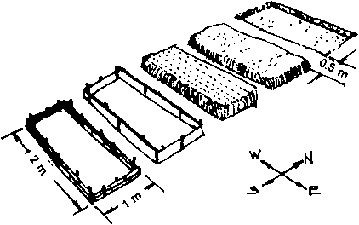
Picture 16
4. Bulid the nursery structure.
Some vegetation surrounding the nursery can provide shade but the following shade structures can also be constructed:
· Hish-shade construction for community nursery.
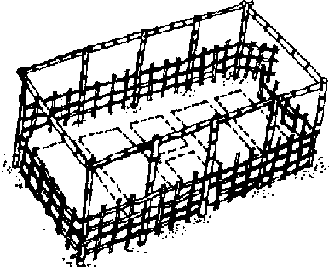
Picture 17
· Fully enclosed structure of one bed for individual farmer.
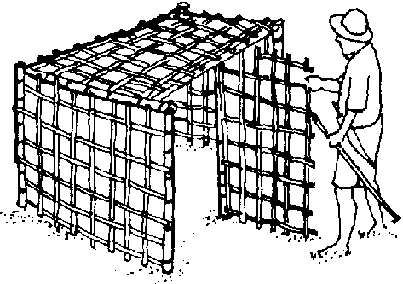
Picture 18
· Low shade. Roof easily lifted off or rolled back when working on bed.
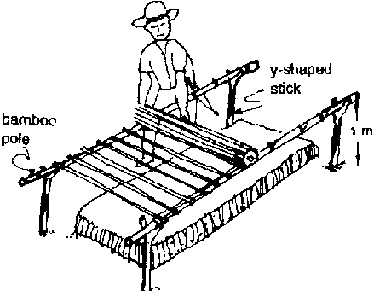
Picture 19
Construct a shade roof to provide partial shade. It should be loosely woven and easily removed when the seedlings need to be hardened off.
Examples:
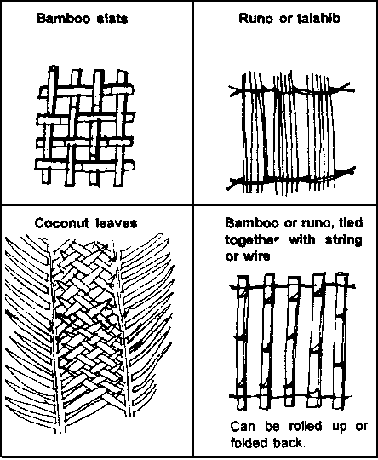
Picture 20
Banana leaves or cogon grass can be added to any of these to provide more shade if needed.
5. Prepare the germination beds.
If many seedlings are to be raised as in for fuelwood or timber plantation, it is generally easier and cheaper to raise them in a seedbed and transplant the bare-root seedlings (uprooted seedlings without soil). This technique works best for hardy species with a strong taproot, such as mahogany or yemane. Bare-root seedlings are easier to transport and plant than potted seedlings. However, survival is lower.
Small or delicate seeds are those with low or unknown
germination percentage, are best sown in a seedbed or seedbox and then transplanted to pots, if desired.
Seedbed
Dig the soil, break lumps of earth and remove remaining roots and rhizomes.
Loosen the soil and make a raised bed, narrow enough to allow for weeding without stepping on it.
Add compost and river sand. Mix well. Sand loosens the soil for better drainage and easy uprooting of the seedlings.
Level the bed. Using a bolo or a stick, make shallow furrows.
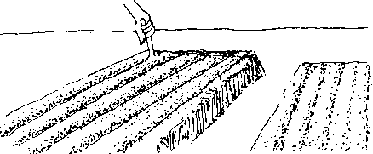
Picture 21
Sow the seeds (treated with protectants necessary) in the furrows. Allow sufficient room for the seedlings to grow if they are to be directly outplanted. If the seedlings will be transplanted to pots when they are still small, the seed may be sown more densely.
Cover the furrows thinly with soil no more than 2-3 times the thickness of the seeds.
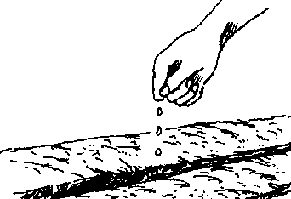
Picture 22
Scatter wood ash all over the seedbed if ants and snails are a problem.
Water the seedbed carefully.
Use mulch (or plastic) like rice straw, grass, compost and partly decomposed forest litter to protect the seed and soil from heavy rains and weeds and to keep the soil constantly moist.
Make sure to allow enough time for the seeds to germinate. Some tree seeds, such as mahogany, may take a full month to germinate.
Seedbox
Use a seedbox for very small seeds like eucalyptus and agoho, Benguet and Mindoro pine and Kaatoan bangkal.
Build a wooden seedbox with 10 cm deep sidings and with holes in the bottom for drainage. An old washbasin can also be used if holes are punched in the bottom. Elevate the seedbox to allow drainage.
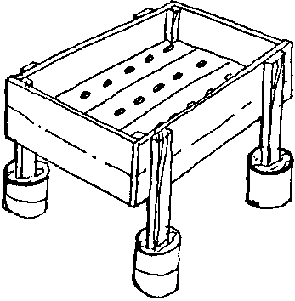
Picture 23
Place the seedbox in a shelter or under a protective roof. Also, set the legs of the seedbox in cans with water to prevent the seeds or seedlings from being attacked by ants.
Prepare the medium of equal parts soil, sand and compost. If possible, screen the soil through fine wire mesh to break up any clods or lumps.
Cover the bottom with 3 cm layer of pebbles or gravel, then fill the seedbox with the medium.
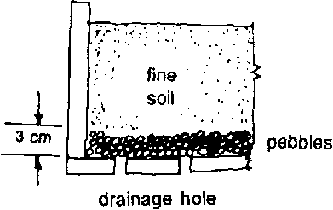
Picture 24
Pour boiling water over the seedbox to sterilize it and to prevent damping off.
Broadcast the seeds, then cover them with fine sand or soil. Another method is by mixing the seeds with the medium before broadcasting.
Watering should be done in the morning and in the afternoon with the use of a sprinkler with a fine mist.
6. Transplant seedlings into individual pots.
If only a few large seedlings are to be raised, it is better to pot them. Fruit tree seedlings are almost always potted, as rootstocks for budding and grafting.
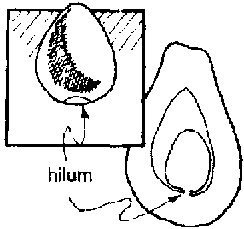
Picture 25
Large seeds of good viability may be sown directly into pots. The point on the seed where it is attached to the fruit is called the hilum. This is where the root will emerge, so plant the seed with this point downwards.
Prepare the seedling pots as the seeds start to germinate.
Mix equal parts of sand, soil and compost. Pulverize soil to break up clods and lumps
If seedling bags are to be used, perforate the bags and fill them with the medium up to the brim, firm enough to stand. Push inwards the two pointed ends of the bags to flatten the bottoms. Arrange neatly in the nursery

Picture 26
Use small (4"x6") plastic bags for forest and fuelwood trees and others which will be outplanted in 4 to 6 months. Use large (6"x8" or larger), sturdy bags for large seeds, for rootstocks and other trees kept in the nursery more than 6 months.
Bamboo pots can be made by sawing sections to length and cutting a hole in the node for drainage. These should be presplit and tied back together again to make removal easier at planting time. Tamp soil in the base to form a bottom. Tin cans can likewise be used by removing both ends and filling with soil. Folded banana leaf sheaths may also be filled with soil and used to pot seedlings, but these must be replaced while the seedling is in the nursery as they quickly rot.
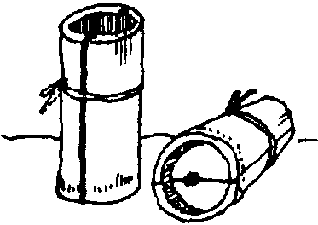
Picture 27
Seedlings are ready to be transferred to individual pots when they have developed at least two true leaves and when the stem is already sturdy.
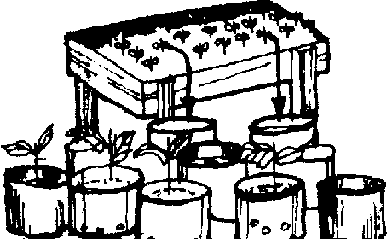
Picture 28
Water the seedlings and the seedling pots. After about two hours, start transferring the seedlings.
Thrust a pointed stick in a seedling pot to make a hole. Plant one seedling per pot taking extra care not to break the roots or bend the tap root. Press the seedling base firmly but gently with the fingers to make sure seedling is stable.
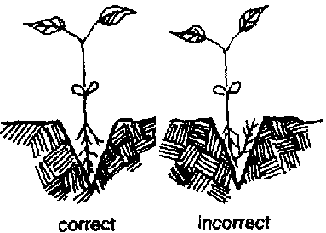
Picture 29
Water the seedlings daily. Weed as needed.
7. Prune tap root to develop a stronger and more compact root system.
If the tap roots have penetrated the bottoms the plastic bags or other pots, lift the seedlings off the ground or slide a bolo under the pots to prune the tap roots.
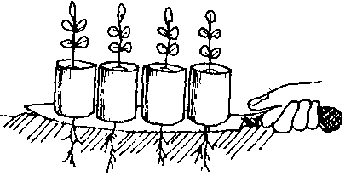
Picture 30
Prune bare-root seedlings with a bolo or a sharp spade thrust in the bed diagonally. Cut the roots at about 20 cm length.
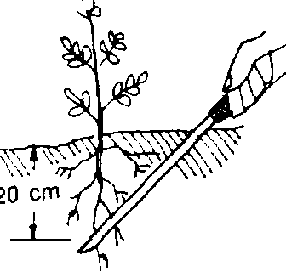
Picture 31
8. Harden off the seedlings a month before field planting.
Gradually remove the roof over the seedlings until they grow in full sun.
Reduce frequency of watering to every other day.
If seedlings are overgrown, the shoots and leaves need to be trimmed back.
9. Sort or grade the seedlings according to quality.
Separate vigorous, healthy seedlings and utilize them for field planting.
Remove or cull out sickly or very poor seedlings.
10. Information on nursery growing period and plantable size of some forest species is shown in Table 3.
Reference: Agpaoa, et. al. 1976. Manual of Reforestation and Erosion Control for the Philippines. GTZ. Eschboin, W. Germany.
TABLE 3. NURSERY GROWING PERIOD OF SOME FOREST SPECIES
|
SPECIES |
NURSERY-GROWING PERIOD |
PLANTABLE SIZE HT (cm) | |
| |
In germination bed (weeks) |
In pots/transplant bed (months) | |
|
Agoho | |
12-16 |
20-30 |
|
Alnus | |
5-6 |
20-30 |
|
Bagras |
1-2 |
3-4 |
20-30 |
|
Benguet |
2-4 |
7-8 |
15-20 |
|
Pine | |||
|
Diptero- carps |
1-4 |
11-12 |
25-30 |
|
Giant Ipil-ipil |
|
5-6 |
15-30 |
|
Gubas |
3-6 |
1-2 |
15-30 |
|
Kaatoan |
8-10 |
3-4 |
15-30 |
|
Bangkal | |||
|
Mindoro |
2-4 |
1-2 |
10-15 |
|
Pine | |||
|
Moluccan |
1-2 |
1-2 |
10-15 |
|
Sau | |||
|
Narra |
2-4 |
5-6 |
20-30 |
|
Yemane |
8-10 |
5-6 |
20-30 |
|
Rattan | |
10-12 |
20-30 |
|
| ||||||||||||||||||||||||||||||||||||||||||||||||||||||||||||||||||||||||
Vegetative propagation
1. SUCKER SEPARATION -- For example: banana, pineapple
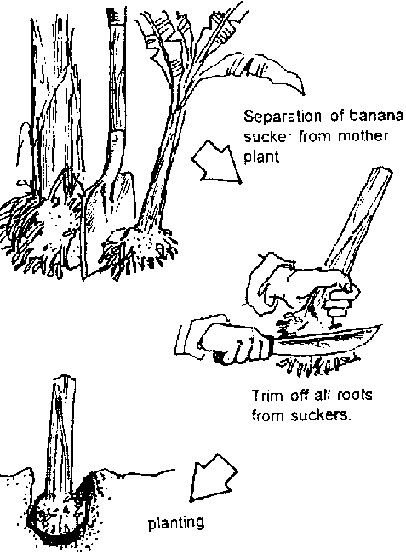
BANANA
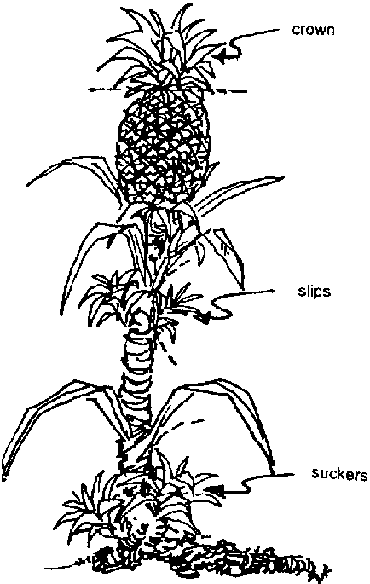
PINEAPPLE
2. CORM DIVISION - For example: banana, gabi (taro)
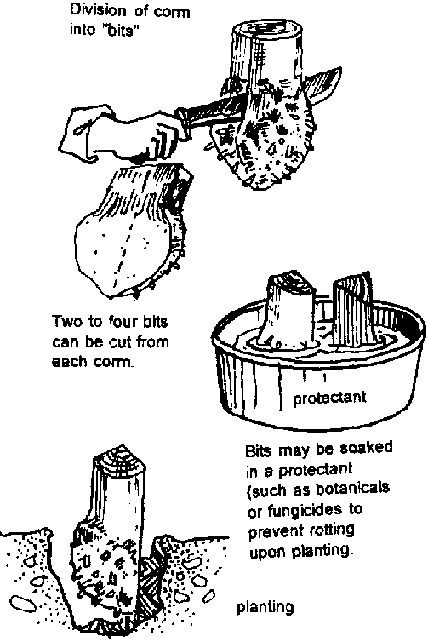
Picture 32
3. STEM OR ROOT CUTTING - For example: rimes, siniguelas
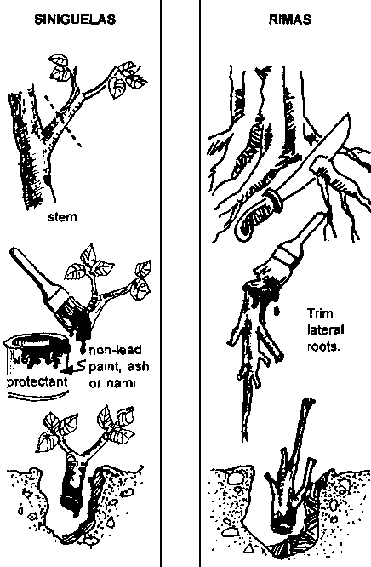
Picture 33
4. MARCOTTING OR AIR-LAYERING - For example: chico
Remove a ring of bark from a branch.
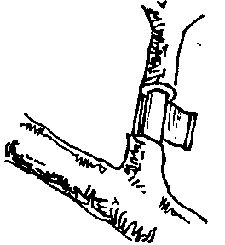
Picture 34
Gently scrape off cambium.
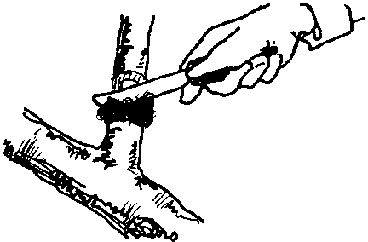
Picture 35
Apply a pall of rooting medium. Wrap with a sheet of plastic, coconut leaf sheath or any material that could help prevent drying-up.
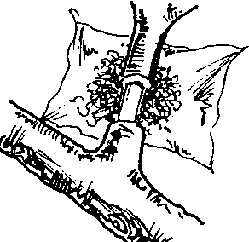
Picture 36
Tie both ends.
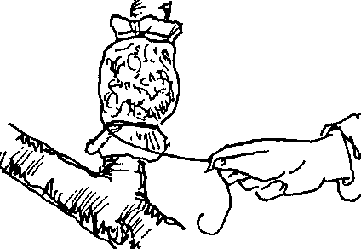
Picture 37
Wait for roots to fully develop. Cut stem below ball and unwrap sheet.
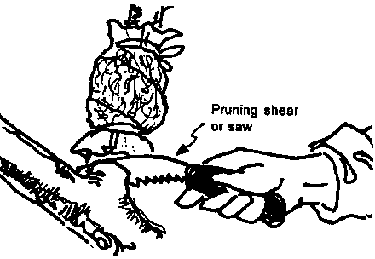
Picture 38
Plant the marcot.
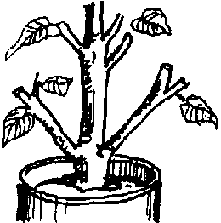
Picture 39
5. INARCHING - For example: rambutan
Make a side cut on rootstock (A) and scion branch (B)
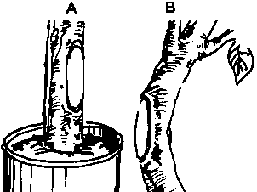
Picture 40
Join rootstock and scion together. Tie with a string.
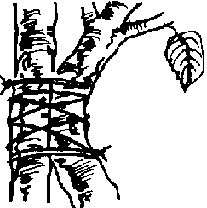
Picture 41
After 1-3 months or upon complete union, cut above rootstock and below the scion.
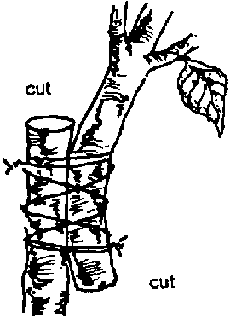
Picture 42
6. CLEFT GRAFTING - For example: mango
Make vertical incision on rootstock.
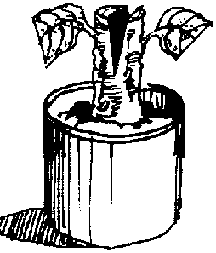
Picture 43
Cut scion budstick into a short wedge.
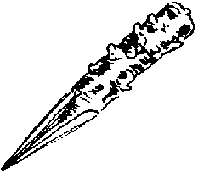
Picture 44
Insert budstick into rootstock.
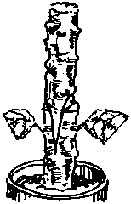
Picture 45
Wrap union with thin strip made of plastic, cloth dipped in wax, or any material that could help prevent drying up.
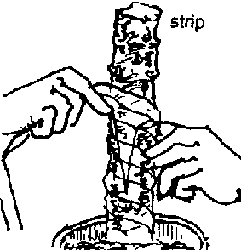
Picture 46
Cover with plastic bag or anything that could help reduce drying up.
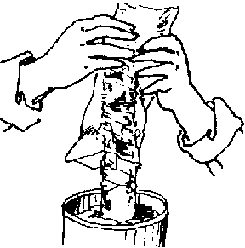
Picture 47
Remove plastic bag as new shoot emerges.
Remove strip before planting.
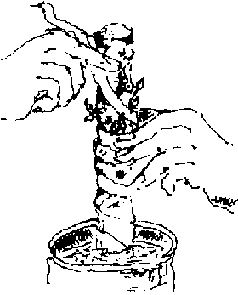
Picture 48
7. PATCH BUDDING - For example: santol
Remove a rectangular piece of bark from rootstock (A) scion (B).
Fit scion bud into cut on rootstock
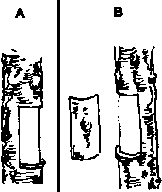
Picture 49
Cover with a thin strip of plastic or any material that could help reduce drying up.
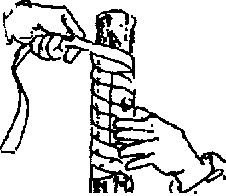
Picture 50
After 2 weeks, remove strip to expose bud. Cut back rootstock above union.
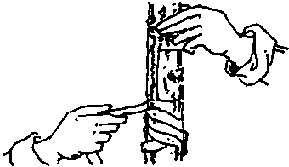
Picture 51
8. SHIELD BUDDING - For example: calamansi
Make an inverted T cut on the bark of rootstock (A)
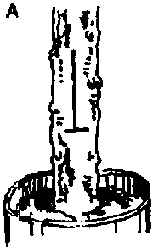
Picture 52
Remove a shield bud from scion (B)
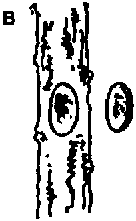
Picture 53
Insert bud into rootstock.

Picture 54
Cover with a thin strip of plastic or any material that could also prevent drying up.
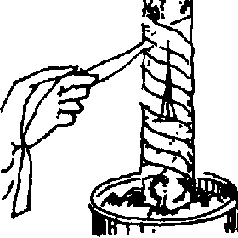
Picture 55
After 2 weeks, remove plastic strip to expose bud. Cut back rootstock above union.
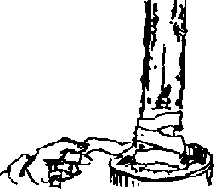
Picture
56
|
| ||||||||||||||||||||||||||||||||||||||||||||||||||||||||||||||||||||||||
Asexual propagation methods for commonly used agroforestry species: Fruit crops
|
COMMON NAME |
SCIENTIFIC NAME |
PROPAGATION METHODS |
|
Alingaro |
Elaeagnus philippinensis |
Clefl grafting, marcotting |
|
Alupag |
Litchi chinensis ssp. Philippinensis |
Cleft grafting, inarching, marcotting |
|
Atemoya |
Annona cherimoya x squamosa |
Cleft grafting, patch budding |
|
Atis |
Annona squamosa |
Cleft grafting, patch budding |
|
Avocado |
Persea americana |
Cleft grafting, patch budding |
|
Bago |
Gnetum gnemon |
Marcotting |
|
Balimbing |
Averrhoa carambola |
Cleft grafting |
|
Banana |
Musa x paradisiaca |
Corm division, sucker separation |
|
Barobo |
Diplodiscus paniculatus |
Cleft grafting, marcotting |
|
Bignay |
Antidesma bunius |
Cleft grafting, marcotting |
|
Biriba |
Rollinia mucosa |
Cleft grafting |
|
Bitungol |
Flacourtia rukam |
Cleft grafting |
|
Caimito |
Chyrsophyllum cainito |
Cleft grafting, marcotting |
|
Calamansi |
Citrus madurensis |
Cleft grafting, marcotting, shield budding |
|
Cashew |
Anacardium occidentale |
Cleft grafting, marcotting |
|
Chico |
Manilkara zapota |
Clefl grafling, marcotting |
|
Datiles |
Muntingia calabura |
Root cutting |
|
Duhat |
Syzygium cumin) |
Cleft grafting |
|
Durian |
Durio zibethinus |
Cleft grafting, patch budding |
|
Galo |
Anacolosa frutescens |
Clefl grafting, marcotting |
|
Granada |
Punica granatum |
Cleft grafting, marcotting |
|
Guava |
Psidium guajava |
Cleft grafting, marcotting, stem cutting |
|
Guayabano |
Annona muricata |
Cleft grafting |
|
Jak (langka) |
Arocarpus heterophyllus |
Cleft grafting |
|
Kabuyaw |
Citrus hystrix |
Cleft grafting, shield budding |
|
Kalumpit |
Terminalia microcarpa |
Cleft grafting, marcotting |
|
Kamachile |
Pithecellobium dulce |
Cleft grafting |
|
Kamias |
Averrhoa bilimbi |
Patch budding |
|
Kayam |
Inocarpus fagiferus |
Cleft grafting, marcotting |
|
Kubili |
Cubilia cubili |
Cleft grafting |
|
Lanzones |
Lansium domesticum |
Cleft grafting, marcotting |
|
Lipote |
Syzygium curranii |
Cleft grafting |
|
Litchi |
Litchi chinensis |
Marcotting |
|
Mabolo |
Diospyros blancoi |
Cleft grafting |
|
Makopa |
Syzygium samarangense |
Cleft grafting, marcotting |
|
Mango |
Mangifera indica |
Cleft grafting |
|
Marang |
Artocarpus odoratissimus |
Patch budding |
|
Paho |
Mangifera altissima |
Cleft grafting |
|
Pangi |
Pangium edule |
Cleft grafting |
|
Pili |
Canarium ovatum |
Cleft grafting, patch budding |
|
Pineapple |
Ananas comosus |
Separation of slips and suckers |
|
Pomelo |
Citrus maxima |
Cleft grafting, shield budding |
|
Rambutan |
Nephelium lappaceum |
Cleft grafting, patch budding |
|
Santol |
Sandoricum koetjape |
Cleft grafting, patch budding |
|
Siniguelas |
Spondias purpurea |
Stem cutting |
|
Tamarind |
Tamarindus indica |
Cleft grafting |
|
Tampoy |
Syzygium jambos |
Cleft grafting |
|
Tiesa |
Pouteria campechiana |
Cleft grafting |
|
| ||||||||||||||||||||||||||||||||||||||||||||||||||||||||||||||||||||||||
Rooting of cuttings in homemade mist chambers
Propagating trees by using cuttings will reproduce the desired exact characteristics (like size of fruits, sweetness) of the trees you want, shorten their maturity period, dwarf their size, multiply them fast over a short period.
Common perennial trees you can propagate by cuttings are citrus (lemonsito, oranges, lime, etc.), guava, rambutan, barbados cherry (aserola), coffee, cacao and black pepper.
A simple way of propagating cuttings is done thru the use of a homemade propagation chamber described in tines sheets. The process detailed here has been tried at the Mindanao Baptist Rural Life Center and is found practical for a small farm and community nursery project.
PROCEDURE
Make a propagation chamber.
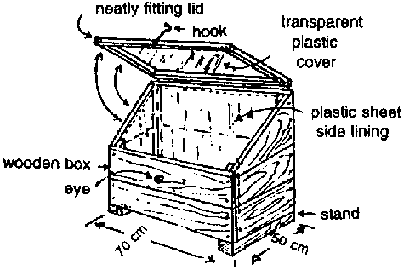
Picture 57
1. Use a wooden or concrete box with the size indicated in the illustration or according to the number of seedling to be propagated.
2. Line the inside wall with plastic sheet to ensure that moisture is retained for a longer period. Cover the lid with transparent plastic sheet to let in some light.
Fill with river sand.
1. Secure well-washed river sand and stones.
2. Line the
bottom of the box with stones to prevent the sand from being washed out.
3.
Sterilize the sand either by sun-drying or pouring boiling water over it.
4.
Place under shade facing east.
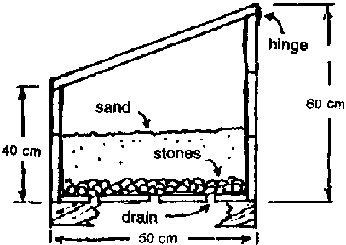
Picture 58
Prepare and plant the cuttings.
General rule. Choose the young stem. Cut at the node and cut half of the leaves off for slower transpiration. Cut root end may be dipped in rooting hormones to facilitate root development.
Citrus and cherries. Cut 10-12 cm from the tip. Choose the green stem, not the yellowish or brown ones. Cut about two cm from the terminal bud. Cut leaf blades in half. Barely touch the node with full strength growth hormones for one second. Plant in the sand inside the chamber.
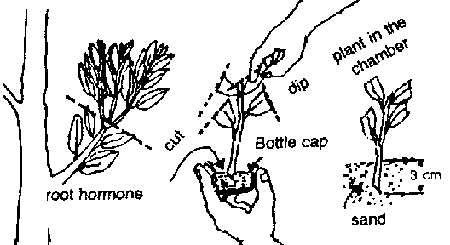
Picture 59
Coffee. Choose green, young watersprouts. Cut 4-6 cm below the node. Remove lateral branch, cut leaf blades in half, cut stem vertically to produce two planting materials. Dip in rooting hormone as in citrus. Plant
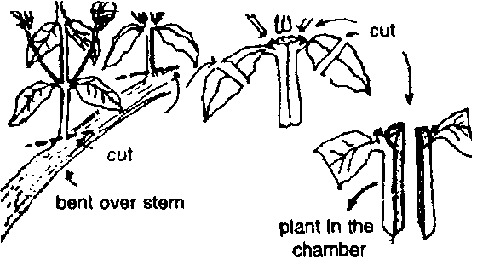
Picture 60
Blackpepper. Choose the runners or the vertical, climbing branches for propagation. Lateral branches do not climb. Cut four to six cm from the node, leave two to three nodes for every cutting. Rooting hormone is not needed. Plant into chamber.
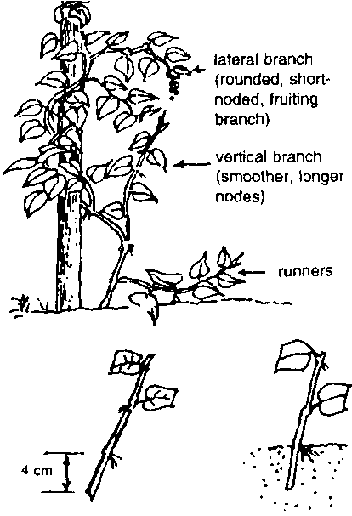
Picture 61
Make the chamber air-tight.
1. Conserve moisture to prevent dehydration or wilting of the cuttings.
2. Open the chamber (about three times a day) to avoid the incidence of fungus attack.
3 Frequency of watering depends on the rate of drying of your chamber. But as a general procedure, water once in the morning and again in the afternoon.
4. Water carefully to avoid toppling the cuttings.
Transfer rooted cuttings.
1. It will take 1.5-2 months before cuttings develop enough roots.
2. Uproot carefully and transfer cuttings into polyethylene bags (6" x 7") with soil mixture of equal parts of sand, compost of manure and soil.
3. Let the potted cuttings remain under shade and wellwatered until they develop new shoots.
4. Harden seedlings for about a week under the sun or partially shaded area before transferring to the field. Place in moist bag when transporting.
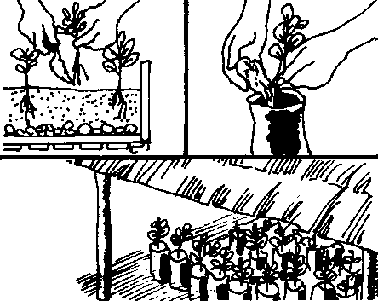
Picture
62