 |
| ||||||||||||||||||||||||||||||||||||||||||||||||||||||||||||||||||||
|
| ||||||||||||||||||||||||||||||||||||||||||||||||||||||||||||||||||||
IIRR
The International Institute of Rural Reconstruction is a nonprofit, nongovernment organization that aims to improve the quality of lives of the rural poor in developing countries through rural reconstruction: a sustainable, integrated, people-centered development strategy generated through practical field experiences.
IIRR publications are not copyrighted. The Institute encourages the translation, adaptation and copying of materials for non-commercial use, providing an acknowledgement to IIRR is included.
Correct citation:
IIRR. 1994 Ethnoveterinary medicine in
Asia: An information kit on traditional animal health care practices. 4 vols.
International Institute of Rural Reconstruction, Silang, Cavite, Philippines.
Published 1994 by the International Institute of Rural
Reconstruction
Silang, Cavite 4118
Philippines
Printed in the Philippines
ISBN
0-942-717-627
|
| ||||||||||||||||||||||||||||||||||||||||||||||||||||||||||||||||||||
Collaborating organizations
Bread for the World
P.O. Box 10 11 42
D-70010 Stuttgart,
Germany
Heifer Project
INTERNATIONAL
1015 South Louisiana
P.O.
Box 808
Little Rock, Arkansas 72203, U.S.A.
THE WORLD BANK
Small Grants Program
1818 H Street, N.W.
Washington, D.C. 20433
U.S.A.
German Appropriate
Technology
Exchange
Dag-Hammarskj�ld-Weg 1
P.O. Box 5180
65726 Eschborn, Germany
International Institute of
Rural Reconstruction
Y.C.
James Yen Center
Silang, Cavite 4118
Philippines
|
| ||||||||||||||||||||||||||||||||||||||||||||||||||||||||||||||||||||
Participants and workshop staff
Participants
Nita Abena (Philippines)
Jayvir V. Anjana (India)
Luka
Choemuen (Thailand)
Baldwin Dy (Philippines)
Mila Gracia Ejercito
(Philippines)
Tomas J. Fernandez, Jr. (Philippines)
Nitya S. Ghotge
(India)
Scott Killough (USA)
Vinai Klunsorn (Thailand)
Sivagurunathar
Kumaraswamy (Sri Lanka
Chheng Heat Leao (Cambodia)
Carmencita Mateo
(Philippines)
Evelyn Mathias (Germany)
Constance McCorkle (USA)
Somrnay
Mekhagnomdara (Laos)
Tri Budhi Murdiati (Indonesia)
H.D. Wasantha Piyadasa
(Sri Lanka)
Sagari R. Ramdas (India)
Piyasak Sukarnthapong
(Thailand)
Aem Wangklang (Thailand)
Medino A. Yebron (Philippines)
Translators
Montawadee Krutmechai
Winai Yothinsirikul
Steering committee and workshop management
Nita Abena
Mila Gracia Ejercito
Scott Killough
Evelyn Mathias
(Workshop Coordinator)
Paul Mundy
Jim Oprecio
Jimmy Ronquillo
Editors
David Abbass
Lyn Capistrano-Doren
Constance
McCorkle
Raylene Montes
Paul Mundy
Jimmy Ronquillo
Sheila
Siar
Desktop publishing
Carmenia May Magno
Jel Montoya
Angie Poblete
Artists
Florante C. Belardo
Ricardo E. Cantada
Peaches
Gamboa
Arnold Gardon
Ronie Ramacula
Bernie Remoquillo
Logistics
Lhai S. Kasala
Lorna Villaflor
Support
Thess Aquino
Carding Belenzo
Paulit Garcia
Gerry
Medina
Jel Montoya
Rollie
Ramos
|
| ||||||||||||||||||||||||||||||||||||||||||||||||||||||||||||||||||||
How to use this manual
This is one of four manuals on traditional animal health care practices (or "ethnoveterinary medicine") in tropical Asia. The manuals were compiled during a participatory workshop held at the International Institute of Rural Reconstruction in July 1994. The four manuals cover swine, poultry, ruminants (cattle, buffaloes, sheep and goats) and general information. For details, see the General information manual.
The topics in this manual have been broadly presented to include the whole spectrum of "conditions" which a field practitioner may encounter in the care and management of livestock.
Topics which describe a disease or condition present the following information:
|
Symptoms |
key symptom(s) by which the disease can be identified. |
|
Causes |
primary cause(s) of the disease. |
|
Prevention |
appropriate preventive measure(s) to avoid disease onset. |
|
Treatment |
a detailed description of the treatment(s). |
The treatments list the ingredients by their botanical (or Latin) name and a common English name. For some commonly known species (e.g., garlic, ginger, coconut, banana, guava), only the English name may appear in the text. The General information manual contains a complete list of plants named in the four manuals.
The treatments or remedies which require multiple ingredients are presented in a step-by-step "recipe" format which lists all ingredients to be used, and describes how to prepare them. See the General information manual for details on how to prepare remedies such as fomentations, poultices and decoctions. Many remedies which require only a single ingredient are presented in tables. Each remedy is identified by the "." mark; where several remedies are presented, the choice of the remedy is left to the user.
After each treatment, the countries in tropical Asia where the treatment is practiced (as validated by the workshop group or through references) are presented in boldface parentheses. Immediately after the names of the countries is a series of numbers that reflect the validation criteria used in the workshop:
1 Workshop participants agreed that the treatment would be useful.2 Treatment is widely used in a region or a country (some remedies were also validated against practices from outside Asia).
3 Workshop participants had first-hand knowledge of the remedy's use on-farm.
4 Traditional healers are known to use the remedy.
5 The remedy is cited in the literature in one of two ways: (1) it is used to treat them same problem in humans or another animal species; or (2) this plant has proven pharmacological activity to treat the problem in question. For instance, laboratory tests have shown that Nicotiana tabacum (tobacco) leaf extract is effective against Staphylococcus aureus bacteria in vitro (Syat 1990). This tends to support the use of tobacco leaves in treating wounds.
6 The remedy has been scientifically validated as effective to treat the problem in the livestock species in question. Relevant references are given under the corresponding plant name in the Glossary of medicinal plants in the General information manual.
Dosages and preparation methods in indigenous practice are often imprecise and vary widely between individuals and regions. The dosages and methods given are those that, according to the professional judgement and experience of the workshop participants, are most suitable, are easy to prepare and are likely to be effective. The workshop participants and IIRR have made every attempt to ensure that the remedies are effective and are not harmful. However, they cannot guarantee this or be held liable for problems arising from these practices.
Unless noted to the contrary, all dosage quantities for treatments are for single dosage applications; in other words, each treatment should be prepared at the time of application according to the quantities specified. Dosages for poultry are usually the amount needed to treat 10 adult birds.
Where possible, simple measurements (handful, cup, etc.) have been given for ease of use by field practitioners. The General information manual contains a guide to commonly used weights and measures. More detailed measurements (milliliters, etc.) are also given to allow a practitioner to be as precise as the particular conditions may allow.
This symbol highlights precautions to heed when using a
treatment.
This symbol highlights reminders.
This symbol marks diseases
that can affect humans.
All references used in this manual are listed in the References section in the General information manual.
|
| ||||||||||||||||||||||||||||||||||||||||||||||||||||||||||||||||||||
Reduced appetite
Symptoms
· Refusal to eat.
· Listlessness-not active, do not forage.
· No gain in weight.
Causes
· Illness.
· Bad food or water.
· Overcrowding, poultry house and surroundings are too
hot or too cold.
· Disease which causes sores
in the mouth.
· Worm infestation.
See section on Heat stress.
Prevention
· Clean the
surroundings.
· Do not overcrowd the
birds
· Ensure Poultry house is comfortable.
(See Housing)
· Avoid sudden chances in
diet.
· Provide fresh, clean and wholesome
food.
Treatment
· Change the diet.
· If the birds show additional symptoms such as those of diarrhea or coughs and colds, see section on these diseases for the proper treatments.
· Feed meat scraps, especially chopped liver, to stimulate the appetite. Meat stimulates the birds' digestive system.
· Give water from fresh, tender coconuts as the only source of drinking water for a few days until the appetite returns to normal.
· Use any of the remedies given below. All dosages are for 10 adult birds and are to be mixed fresh every morning with the feed for the day. If the appetite of the birds still does not improve after three days of treatment, seek professional help.
-Crush 3-4 cloves of garlic and add to the feed.
(India)
-Crush 10-15 curry (Murraya koenigii) leaves and add to
feed.
-Scrape 10 g of ginger rhizome and mix with feed.
-Chop 5 chills
(Capsicum annum) and mix with
feed.
|
| ||||||||||||||||||||||||||||||||||||||||||||||||||||||||||||||||||||
Coughs and colds
Symptoms
· Sneezing.
· Discharge from the nose.
· Watery eves.
·
Lack of appetite.
· Feed sticking to
beak
· Ruffled feathers.
Cause
Coughs and colds often occur during sudden changes of weather and in the wet season.
Coughs and colds in poultry can be symptoms of many different diseases, including fowl plague, Newcastle disease and coryza. These diseases can be spread by air, drinking water and feed. There is no cure for some of them; the treatments below will help ease the symptoms only.
If the birds have colds with green diarrhea and fits or convulsions and, if many birds die, the problem may be Newcastle disease. There is no cure for this. You can prevent it with a cheap and effective vaccination. See the section on Infectious diseases, page 21.
If the birds have swollen faces, the disease may be coryza. Use one of the remedies made from Heliotropium indicum or Spondias pinnate below.
Prevention
· Proper hygiene-such as clean
water and equipment.
· Good
feeding.
· Avoid overcrowding.
· Protect the birds from the weather.
· Vaccinate the birds against Newcastle disease and
other diseases.

Provide shelter from the weather.
· Mix ½ teaspoon of turmeric rhizome powder in every liter of drinking water. Used also for humans. (India)
Treatment
In administering any drug orally, keep the bird's head level (See Application of Herbal Medicine in General Information). Otherwise, the medicine may go into the bird's lungs.
· Boil 1 part mature leaves of Heliotropium indicum or young leaves of Spondias pinnata in 2 parts of clean water for 5-10 minutes. Give the decoction to the birds through the mouth, using a dropper, 2-3 times a day until the symptoms disappear. Use 3-5 ml (½ to 1 teaspoon) of decoction per kilogram of bodyweight. This treatment is effective for coryza.
(Leyte, Philippines. 1, 2, 3, 4, 5, 6)
· Crush garlic cloves and mix them with the feed. Use 1 clove for each bird per day to prevent and cure diseases. (Throughout India. 1, 2, 3, 4, 5, 6)
· Soak 10 g of seeds of Trigonella foenum-graecum (fenugreek) in 1 liter of boiling water. Allow to cool. Give as the only source of drinking water until symptoms disappear. (Parts of India. 1, 2)
· Chop ¼ onion per bird and feed it to the chickens each day. This is a common practice in India to prevent and cure poultry diseases. (India, 1, 2, 3, 4)
· Boil a handful of basil (Ocimum sanctum) leaves in 1 liter of water until only half of the water remains. Mix this in the drinking water. The leaves can also be chopped and mixed with the feed.
(Parts of India. 1, 2, 4)
· Pound 10 g of fresh ginger rhizome, squeeze out the juice and mix the juice with 250 ml of water and 10 g of brown sugar. The mixture is enough for 10 birds. Give as drinking water every day. (India. 1, 2, 3, 4)
· Take a whole plant of Andrographis paniculata. Boil with 2 liters of water till 1 liter is left. Soak 2 handfuls of uncooked milled rice in this water overnight. Feed to chicken next morning mixed with other feed. This prevents disease in unaffected flocks.
|
| ||||||||||||||||||||||||||||||||||||||||||||||||||||||||||||||||||||
Diarrhea
Diarrhea can be caused by many different problems. See the table below and the section on Infectious diseases.
|
Symptome |
Causes |
|
Bloody and watery diarrhea. |
Most likely to be coccidiosis. |
|
Worms in diarrhea. |
Worms. |
|
Diarrhea is green or white. |
Bacterial infection. (See section on Infectious diseases). |
|
Diarrhea loose and grey. |
Nutritional, due to sudden change in diet, excessive feeding of one grain, too much salt in diet. |
|
Diarrhea watery and green, with foul odor. Many chickens in village die. |
Newcastle disease. (See section on Infectious diseases). |
Prevention
· Provide clean drinking water.· Give clean feed.
· Sweep around and inside the home every day.
· Throw garbage and bird droppings into a manure pit.
· Crush together 7-10 cloves of garlic and a fingernail sized piece of dried turmeric rhizome. Mix this amount in the poultry feed every day (this is enough for 10 adult birds).
· Boil 250 g of brown sugar with 1 liter of water. Add 250 g of powdered turmeric rhizome and boil until only half the water remains. Allow to cool and store in a clean, dry bottle. Add 3 tablespoons of the mixture in the drinking water each day. This amount is for 10 birds.
(India, Indonesia. 1, 2, 3, 4)
Treatment
Use one of these remedies. The dosages are enough for 10 birds.
· Crush 7-10 cloves of garlic and mix with the poultry feed. Give for 2-3 days or until the diarrhea stops. This can also be used as a preventive (see above). (1, 2, 3, 4)· 7-10 cloves of garlic.
1 onion bulb.
5-10 g (¼ handful) of cumin seeds
¼ handful of fenugreek seeds.
Thumb-sized piece of dry turmeric rhizome.
Grind these ingredients together and mix in the feed.
Give
for 2-3 days. (1, 2, 3, 4)
· Grind 5 g of seeds (or 5 g of bark) of Sesbania aegyptiaca. Mix with feed.
(Andhra Pradesh, India. 1, 2, 3, 4, 5)· Grind ¼ of a dried mace (Myrstica fragrans) fruit. Add to the feed for 2-3 day-. (1, 2, 3, 4)
· Grind a handful of leaves or roots of Azima tetracantha and mix with enough yoghurt to make a paste. Add to the feed. (Andhra Pradesh, India. 1, 2, 3, 4)
· Give the water left after cooking rice (kanjee) instead of drinking water. This helps bind the stomach and is used to rehydrate the sick birds. (1, 2, 3, 4)
· Give refined wheat flour as feed as long as the diarrhea lasts. (India. 1, 2, 3, 4)
· Grind together 10 g of rock salt and ¼ dried fruit of nutmeg (Myristica fragrans). Mix with the feed for 3-4 days. (1, 2, 3, 4)
· 1 handfull of fresh Tinosperma
crispa vines.
10 cm of fresh Acacia insuavis branch.
10 cm of fresh neem
bark.
1 fresh Andrographis paniculata stem.
Mix together and pound all ingredients. Squeeze out the juice. Use a dropper or syringe to put two drops of juice into the chicken's mouth once a day for 3 days. Or mix the juice with rice and feed it to the birds.
(Thailand. 1, 2, 3, 4)
|
| ||||||||||||||||||||||||||||||||||||||||||||||||||||||||||||||||||||
Intestinal worms
Symptoms
· Poor appetite.
· Poor weight gain.
· Worms in the feces.
· Inactivity.
· Pale
comb and wattle.
· Dull eyes.
· Irregular diarrhea.
· Dull, ruffled feathers.
· Bare patches of skin without feathers.
Intestinal worms
Cause
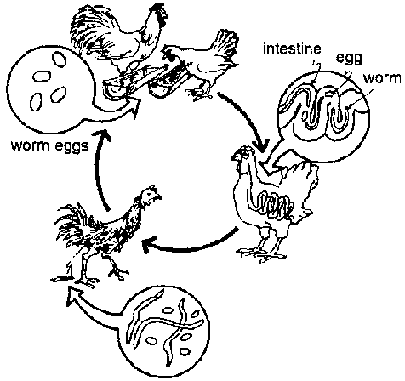
Chickens may consume feed or water that is contaminated with worm eggs. The eggs hatch into worms, which in turn lay eggs inside the chicken's body. The eggs are expelled in the chicken's feces and may mix again with the chicken's food and water. Eggs become worms; worms lay eggs. As long as the chicken is not dewormed, this cycle continues. Worms particularly affect young chickens (up to 2 months old).
Prevention
· Provide clean food and
water.
· Deworm regularly using the
treatments below.
Preparing Arecha catechu
Treatment
Use any of the following treatments. The dosages are for adult birds.
· Pierce the unripened fruit or stem of papaya with a knife to get the sap. To get a lot of sap, do this in the early morning before the sun rises. Mix 5 parts of sap with 1 part of water. Give 2-3 teaspoons of liquid (1015 ml) for every 10 chickens for 5 days. (Indonesia. 1, 2, 3, 5, 6)
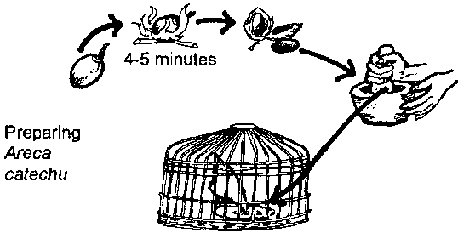
· Heat air-dried Areca creche nuts in an open fire just enough to roast them. Open the shell and remove the nut. Pound the nut and mix with the poultry feed. Put a pinch of powder in the mouth of each bird once a day for a week. (India, Indonesia. 1, 2, 3, 4, 5)
· Pound 250 g of fresh turmeric rhizome. Squeeze out juice and use it as drinking water. Give this medication once every month. (India, Indonesia. 1, 2, 3, 4)
· Grind at least 6 fresh cloves of garlic and mix them into the feed. Give this quantity to 10 chickens for 1-2 days. Repeat the medication once a month. (India. 1, 2, 3, 4, 5, 6)
· Boil a handful of fresh bark or one whole fresh fruit of pomegranate in water for 15-20 minutes. Use half a glass (125 ml) of water for every handful (60 g) of bark or fruit. Strain to get the juice. Give juice as drinking water for 2-3 days. (India. 1, 2, 3, 4, 5)
· Boil 1 cup of air-dried leaves and seeds of Quisqualis indica in 2 cups of water for 15 minutes. Give 1 tablespoon of the juice, using a dropper for every adult bird once a month. (Philippines. 1, 2, 3, 4, 5)
· Boil 1 cup air-dried seeds of Bixa orellana in 2 cups of water for 15 minutes. Strain to collect the juice. Cool and force-feed 1 tablespoon juice per bird, using a dropper. Do this once a month. (Philippines. 1, 2, 3, 4, 5)
· Boil 1 cup air-dried seeds of Lansium domesticum in 2 cups of water for 15 minutes. Strain, cool and force feed 1 tablespoon of the juice per bird using a dropper.
Do this once a month. (Philippines. 1, 2, 3, 4, 5)
|
| ||||||||||||||||||||||||||||||||||||||||||||||||||||||||||||||||||||
Ticks, lice and mites
Ticks
Symptoms
· Larvae attached to the
skin.
· Anemia.
· Loss of weight.
·
Red spots on the skin where the ticks have fed.
· Birds do not forage actively.
· Birds stay in one place and appear
depressed.
· Birds are uneasy at
night.
· Egg production decreases.
Cause
Ticks bite the birds at night, so they are rarely seen attached to the bird. After the ticks fall off. They breed in cracks in the walls and floor. The adult females lay eggs which hatch quickly in warm weather. Ticks are especially a problem when the temperature is high. They are difficult to eradicate because they do not stay on the bird during the daytime. Ticks can carry spirochetosis disease. They can also attach onto humans and suck the blood.
Lice
Symptoms
· Small, white lice eggs on the
feathers.
· Lice moving on skin and
feathers.
· Reduced egg production.
· Slower weight gain.
· Birds constantly peck at themselves or scratch them
selves with their beaks.
Cause
Poultry are infected by biting (not sucking) lice. Lice, unlike ticks, stay all their lives on the bird's skin. They lay eggs on the feathers. Lice can also bite people but do not stay on humans for long.
Prevention
These methods are used against both ticks and lice.
· Smoke the chicken houses
regularly (see remedies below).
· Fill in
cracks in the walls
· Change the bedding
regularly.
· Clean around the
house.
· Put all waste into a manure pit.
Treatment
· Burn any of the plants listed below near or under the poultry house so the smoke goes into the house. The amount of leaves burned depends on the size of the house. This will drive away lice and ticks. Keep all birds and animals away from the smoke. People should keep away from the smoke, too.
-Dry leaves of Diospyros ebenum. (Central India. 1, 2, 3, 4)-Dry tobacco leaves (do not allow birds to eat tobacco). (Throughout South and Southeast Asia. 1, 2, 3, 4, 5)
-Powdered bark of Citrus acida. (Thailand. 1, 2, 3, 4)
-Fresh, whole plant of Jasminum sambac. (Philippines. 1, 2, 4)
-Fresh or dry leaves of Premna odorata. (Philippines. 1, 2, 4)
-Fresh or dry leaves of Vitex negundo. (Philippines. 1, 2, 4)
Many women in India prefer to cook using traditional smoky stoves because they say the smoke drives away lice and ticks inside the home.
· Crush and dry fresh leaves of Premna odorata. Put these under the chicken house. This is used to drive away lice. It also kills lice on contact. (Philippines. 1, 2, 3, 4, 5)
· Hang a bouquet of Vitex negundo, Ocimum sanctum or lemon grass (Cymbopogon citratus) in the poultry house. (Throughout South and Southeast Asia. 1, 2, 3, 4)
· Rub any of the remedies listed below on the birds' skin. Use as much as needed to cover the entire skin.
-Fresh or dry tobacco leaves. (Throughout South and Southeast Asia. 1, 2, 3, 4, 5)
-A mixture of 2 parts neem (leaves or oil), 1 part of salt and 1 part of ash. (Karnataka, Tamil Nadu and Andhra Pradesh, India. 1, 2, 3, 4)
-A mixture of 1 part of salt and 2 parts of mustard oil. (Karnataka, India. 1, 2, 3, 4)
-Crushed fresh Vitex negundo leaves. (India. 1, 2, 3, 4)
-Pounded fresh or dried Annona squamosa seeds. (Throughout South and Southeast Asia. 1, 2, 3, 4, 5)
Mites
Symptoms
· Small, red bumps on the
skin.
· One or more small red mites on the
bumps. (Mites are the size of a pinhead.)
·
Birds are uncomfortable and ruffle their feathers.
· Birds peck themselves.
Cause
Mites suck the blood of birds. They can attack all ages and both sexes. but layers are particurlarly affected. Mites can also bite people, causing irritation and itchiness anywhere on the body.
Prevention and treatment
· Regularly clean poultry houses, especially before hens start to lay.
· Put 1 handful of fresh lemongrass (Cympobogon citratus) in the nest before the hen starts to lay. Leave is there while the hen lays and broods.
|
| ||||||||||||||||||||||||||||||||||||||||||||||||||||||||||||||||||||
Fungal diseases
Cause Aspergillosis: Aspergillus fumigates.
Aflatoxicosis:
Aspergillus flavus.
Thrush: Candida albicans.
Symptoms
· Birds have difficulty in
breathing.
· They appear depressed: they are
inactive and do not eat.
· They stagger
around.
· They become thin
Fungal infections spread through moldy feed. Acute infections kill the birds.
Ducks are more likely to get infections than chickens.
Prevention
· Feed given to poultry must be thoroughly examined for signs of fungus. Moldy feed must be discarded. Boiling the feed will not get rid of the fungus completely.
· Dry and store feed carefully.
· Crush garlic cloves and add to the feed. Use approximately 1-3 cloves per chicken per day. (India. 1, 2, 3, 4)
· Grind dry turmeric rhizome and mix 1 teaspoon of the powder in 2 liters of drinking water. (India. 1, 2, 3, 4)
Both garlic and turmeric are reputed to have many beneficial properties. It is a good idea to include both every day in the diet of chickens and ducks.
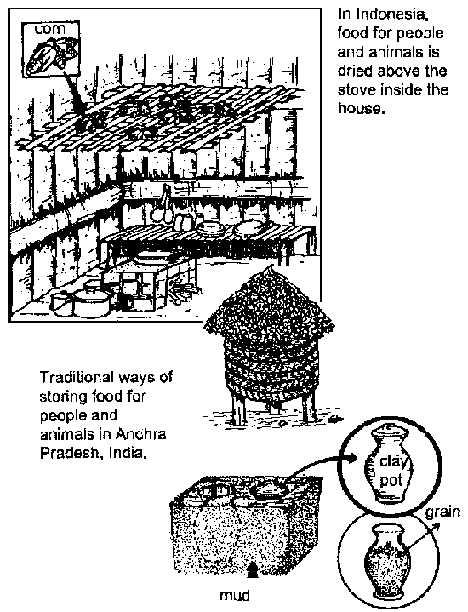
Traditional ways of storing food for
people and animals in Andhra Pradesh,
India
|
| ||||||||||||||||||||||||||||||||||||||||||||||||||||||||||||||||||||
Infectious diseases
Fowl cholera
Symptoms
· Rapid breathing.
· Mucous discharge from the mouth.
· Fever.
· Birds are
inactive and do not eat.
·
Diarrhea.
· Sudden death.
Spread by contact with infected birds.
Prevention
· Proper hygiene and
sanitation.
· Vaccination.
Treatment See Reduced appetite, Coughs and colds and Diarrhea. These treatments help relieve the symptoms only.
Fowlpox
Symptoms
· Blisters or boils which later
form thick scabs.
· Blisters inside the
mouth, nose and eyelids.
· Discharge from the
nose.
· Watery or closed eyes.
Fowlpox is a slow-spreading viral disease of poultry. It kills few birds but reduces their resistance to other diseases, such as pneumonia and diarrhea. The disease is spread by insect bites and by direct contact with sores on affected birds.
Prevention
· Maintain hygiene and sanitation.
· Avoid stress.
· Control mosquitoes by removing stagnant water, pouring kerosene or oil on stagnant water, or hanging a bouquet of Ocimum sanctum leaves inside the poultry house. See Ticks, lice and mites, page 13.
Treatment
These treatments help relieve the symptoms only.
· Pound black pepper (Piper nigrum) seeds and force-feed the birds twice a day for 3 days. The seeds can also be used whole. Use 1 seed for chicks and 2-3 seeds for mature birds.
· Apply ground black pepper on the blisters.
· Grind dry seeds of mature chili pepper (Capsicum annum). Force-feed 5-10 seeds per day for 3 days for adult birds and 2-3 seeds for young birds.
· Grind a handful of leaves of Abrus precatorius with a handful of limestone (red lime). Apply on the affected part once a day for 3 days. (Thailand)
Infectious coryza
Symptoms
· Nasal discharge.
· Sneezing.
·
Swelling of face under the eyes.
Chickens become susceptible to coryza at 4 weeks age. The susceptibility increases with age. The disease lasts two weeks. It is spread by contact with infected birds.
Treatment See Coughs and colds.
Newcastle disease
Newcastle disease (called "ranikhet" in India) is a serious problem in poultry. It can kill large numbers of birds. It spreads rapidly through the flocks in a village. It occurs mainly during changes in the weather (in Indonesia, Thailand, Philippines and Cambodia) and in April and October (in parts of India).
Symptoms
· Diarrhea watery and green,
with foul odor.
· Discharge from the
nose.
· Coughing and sneezing.
· Swelling of the head.
· Head and neck twisted to one side.
· Drooping wings, dragging legs.
· Sleepiness.
·
Full, distended crop.
· Convulsions and
paralysis.
· Death.
Prevention
· Vaccinate birds when they are one-day old. Give a second vaccination at 8 weeks of age or before the start of the rainy season. A vaccine is now available that can be added to the feed.
· Deworm the birds regularly. (Thailand. 1, 2)
· Farmers in Thailand mix the juice of Andrographis paniculata with rice and feed this to the birds to prevent Newcastle disease. (Thailand. 2)
Treatment
See Diarrhea and Coughs and colds.
These treatments help
relieve the symptoms only.
Salmonellosis
Symptoms
· Birds huddle together near the
source of heat.
· Birds do not eat.
· Whitish feces around the vent.
· Death
Many young chickens and turkeys die of salmonellosis. It is spread through the egg and by direct and indirect contact.
Warning
People can catch salmonellosis by eating infected eggs and meat.
Prevention
· Proper hygiene and sanitation.
Treatment
No treatment is recommended since the disease can be transmitted to humans. Kill the affected chicken and cook the meat completely. Bury the other parts so that the disease cannot spread.
|
| ||||||||||||||||||||||||||||||||||||||||||||||||||||||||||||||||||||
Wounds
Poultry can be wounded by sharp objects, pecks and bites.
Cocks are often wounded in cockfights. Chickens with large wounds are usually slaughtered.
Treatment
1. Control the bleeding.
2. Cut the feathers around the wound.
3. Clean with fresh water and soap. Remove dirt, stones and loose skin. Clean again with fresh or salty water.
4. Apply one of the medicines given below along with any of the fly repellents listed. All applications should be made twice a day.
Fresh, open wounds
· Grind together a clove of garlic and an equal amount of fresh or powdered turmeric rhizome with enough coconut oil to make a paste. Apply this to the wound twice a day until it heals. This remedy helps the wound heal fast. (India. 1, 2, 3, 4, 5)
· Grind fresh turmeric rhizome and apply the juice to the wound twice a day until it heals. (India. 1, 2, 3, 4, 5)
· Apply vegetable oil on the wound, then apply wood ash on top of the oil. (Throughout South and Southeast Asia. 1, 2, 3, 4)
· Mix vegetable oil and powdered lime (calcium hydroxide) and apply to the wound. This soothes the wound. (1,2,3, 4, 5)
· Apply fat from a python on the skin once a day until the wound heals. (Laos. 1, 2, 3, 4)
· Mix 1 tablespoon of fish oil and l tablespoon of charcoal powder. Apply on the wound 1-2 times a day. (1,2,3,4)
· Apply wood ash on the wound. (Throughout South and Southeast Asia. 1, 2. 3, 4, 5)
Fly repellents and antiseptics
These medicines repel flies and prevent the wound from becoming infested with maggots.
· Crush a handful of fresh neem leaves and make into a poultice. Apply on the wound. (India, Thailand. 1, 2, 3, 4, 5)
· Grind fresh leaves of Vitex negundo to make a poultice. Apply on the wound. (Throughout South and Southeast Asia. 1, 2, 3, 4, 5)
Wounds with maggots
· Drip the milky sap from the banyan tree (Ficus bengalensis) into the wound. After a little while, the maggots will crawl out. Dress with one of the fly repellent medicines. Repeat this once a day for 2-3 days until all the maggots have come out. Continue treament as for an open wound. Used by Ms Ramanamma, paraveterinarian, Girijan Deepika, tribal areas of East Godavari district, Andhra Pradesh, India. (1, 2, 3, 4)
Crush unripe fruit and seeds of custard apple (Annona squamosa). Apply on wound once a day for 2-3 days (until all maggots are dead). Then dress with any of the other treatments for open wounds or fly repellents until the wound heals. (Throughout South and Southeast Asia. 1, 2, 3, 4, 5)
· Grind a handful of neem leaves and mix with enough coconut oil to make a paste. Apply onto the wound once a day until the wound heals. (Throughout South and Southeast Asia. 1, 2, 3, 4, 5)
Infected wounds
Pound a handful of Eucalyptus globulus leaves and squeeze out the juice. Pour the juice onto the infected wound. Repeat twice a day until the wound heals. (Throughout South and Southeast Asia. 1, 2, 3, 4, 5)
Burns
Wash the burn with cold or cool water. Make a poultice of either of the following medicines and apply it to the burn. Fresh latex or pulp of Aloe vera. (Throughout South and Southeast Asia. 1, 2, 3, 4, 5)
· Honey. (Indonesia. 1, 2, 3, 4, 5)
|
| ||||||||||||||||||||||||||||||||||||||||||||||||||||||||||||||||||||
Housing
Housing practices vary from region to region. In general, housing:
· Protects poultry from the rain, wind, sun and cold.
· Protects poultry from predators and thieves, especially at night.
· Helps prevent and control diseases.
Farmers change the bedding and clean the poultry housing regularly. They sweep the ground inside and around their homes, especially if they raise free-range poultry. It is important to avoid overcrowding in the poultry house.
Types of housing
Cambodia, India, Indonesia, Thailand
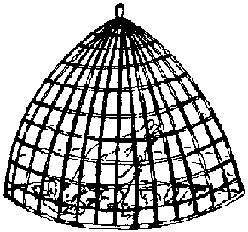
During the day, the chickens are left out to forage. At night, they are covered with a bamboo basket (about 80 cm across and 45 cm high). This basket is big enough for one or two adults and seven to eight chicks. In India, it is kept inside the owner's house at night. In other countries, it is left outside.
Farmers in India place a basket on a beam inside their houses for layers to roost in.
The basket can be used to quarantine sick birds. You car also use it to make sure poultry eat the medicines you put out for them. Mix the medicine with the feed or drinking water and put it under the basket with the birds.
During the night, farmers put free-range birds in a big bamboo basket with a lid. They put the basket under the floor of their stilted homes.
Cambodia, India, Indonesia, Thailand
Philippines
This cage is made of coconut wood or bamboo. One hen and her chicks are kept in the cage for 3-4 weeks after the chicks hatch to protect them from predators and thieves. A clay pot filled with water is put inside. In the wet season, the cage is put under the raised floor of the farmer's house.
For their fighting cocks, farmers in the Philippines build a shelter of two planks of wood. The cock can perch on the bamboo or wooden rod attached to the top of the shelter. A rope around its leg prevents the bird from flying away. A feeder and waterer are placed inside the shelter.
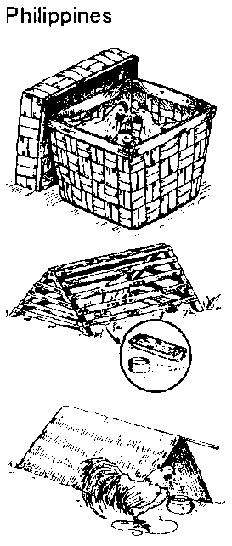
Philippines
Thailand
This bamboo cage can house five adult birds. It is placed on the ground underneath the farmer's house and the whole area under the house is enclosed by bamboo walls. The birds can go in and out through the opening and through the door in the enclosure. Bamboo troughs (made by splitting a large bamboo in half lengthwise) are put inside the cage to hold feed and water
The farmers clean the clean with broom. They put a box on top of the cage for the hens to lay eggs and/brood.
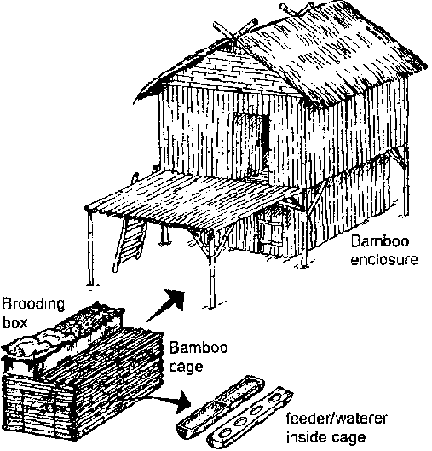
Thailand
Sri Lanka
Two wires are strung between two trees, 3-6 m above the ground. A small poultry shelter for about five birds is placed on the wires. During the day, the birds forage about outside. When a predator approaches, the birds hop up the rope ladder into the shelter. During the night, they go back into the shelter and the ladder is tied up. It is let down again in the morning.
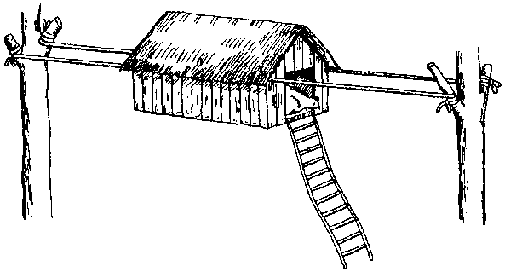
Sri Lanka
Cambodia, India, Indonesia, Philippines, Sri Lanka
This cage is built of wood or bamboo. It is located near the farmer's house (in Sri Lanka, the cage is not fixed but can be moved around). The roof is made of straw, hay, dried grass or dried nipa or other palm leaves. In the Philippines, walls are made by fixing wire mesh or nylon net between bamboo posts.
Bamboo feeders and waterers or tin cans are put inside the house. Rice hulls or rice straw are commonly used for bedding. The floor is made of slatted bamboo so the poultry droppings fall down into a manure pit below. The droppings are cleaned out regularly from both the cage and the pit below. They are used as manure in the fields.
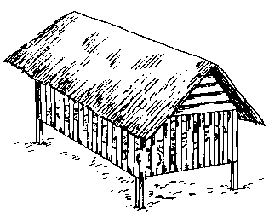
Cambodia, India, Indonesia,
Philippines, Sri Lanka
Cambodia
In Cambodia, poultry are allowed to range freely. They perch on tree branches at night and are protected from the rain by the tree leaves.
India
In India, farmers establish a fence around the poultry house to deter predators from entering the house. They either plant thorny bushes or build a fence of dried, thorny brambles (such as Acacia species). Wire and wood fences are sometimes also used.
Laos
This house is built of wood or bamboo, with a roof of thatched grass. A house measuring 4m × 8m can hold 250300 chickens. On the floor inside the house, farmers put a 10 cm layer of mud. On top of this, they put a 3-5 cm layer of rice hulls. They change the bedding once every two months. Barriers of woven bamboo, 50 cm high, run lengthwise down the house. The hens are let outside to forage during the day.
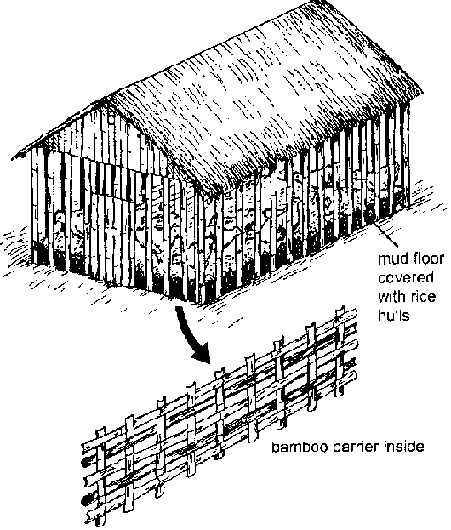
Laos
|
| ||||||||||||||||||||||||||||||||||||||||||||||||||||||||||||||||||||
Heat stress
Heat stress occurs during hot weather. Some breeds of broiler cannot withstand heat.
Symptoms
· Panting, rapid
breathing.
· Poultry eat little.
· Slow growth rate.
· Few eggs laid.
·
Birds become ill more easily.
· Watery
diarrhea of a yellow or white color.
·
Chickens peck at each other.
· Death.
Prevention
· Keep the poultry house shaded
and well-ventilated.
· Use grass or thatch
roofs instead of galvanized tin roofing.
· Do
not overcrowd the birds.
· Keep the litter
dry.
Treatment
· Give water from young coconuts
as drinking water.
· Mix 4 teaspoons of sugar
in 1 liter of water and give as drinking
water.
|
| ||||||||||||||||||||||||||||||||||||||||||||||||||||||||||||||||||||
Feeding
Small-scale poultry raisers in Asia generally use two types of feeding: free-range and using feeders.
Free-range feeding
Free-range poultry eat household wastes, worms, grain seeds, leaves, grasses and insects. Their owners supplement this diet with a small amount of grain each day. The amount varies from household to household and with the household's economic situation. The mother hen forages and feeds her chicks. In doing so, she teaches the chicks to forage for themselves.
Feeders
Farmers put the grain in a feeder in the poultry house or pen. They also provide water to the birds.
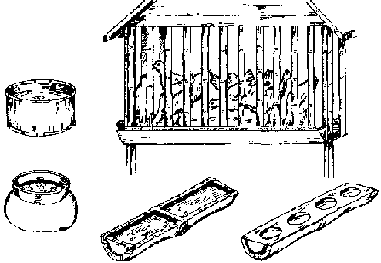
Containers for feed and water
Good nutrition
To give a balanced diet, make sure the birds eat ingredients from each of the four columns in the table below.
|
Cereals |
Meat and beans |
Oilseeds |
Vitamins and minerals | |
|
Barley |
Crab meat |
Lentils |
Coconut cake |
Green |
|
Corn |
Fish |
Mungbeans |
Copra |
grasses |
|
MiIIets |
Insects |
Soybeans |
Cotton seed |
Leucaena leaves |
|
Rice |
Meat scraps |
Brewer's |
Groundnut | |
|
Wheat |
Snails yeast |
Linseed (distiller's corn) | | |
| |
Worms |
Buttermilk |
Mustard seed |
|
|
|
Cowpea Gram (black, green, horse, red) |
Rice polish |
Sesame | |
| | |
Skim milk |
Sunflower seeds |
|
Medicinal additives
Farmers in India regularly provide these additives to prevent intestinal worms and other problems in their chickens.
· Mix 1 teaspoon of turmeric powder in every 2 liters of the drinking water (or a pinch for every glass of water). (India. 1, 2, 3, 4)
·· Grind 6-7 cloves of garlic for every 10 chickens. Mix with the feed. (India. 1, 2, 3, 4)
|
| ||||||||||||||||||||||||||||||||||||||||||||||||||||||||||||||||||||
Calcium deficiency
Symptoms
Lameness.
Slow growth.
Ruffled feathers.
Drop in egg
production.
Eggs have thin shells and break easily.
Splayed legs.
Paralysis.
Treatment
· Grind 20 pieces of blackboard chalk or limestone into powder. Add 1 teaspoon of salt. Add to 10 kg of dry feed. Feed for 10 days. This is enough for 10 birds. (Cambodia. 1, 2, 3, 4)
· Mix half a fistful of any of the following with the feed (this is enough for 10 adult chickens).
|
Oyster shell flakes |
Fish or shrimp meal |
Skimmed milk |